An authoritative technical manual and procurement guide for facility managers, EHS directors, and lab designers specifying floor-mounted Walk-in Fume Hoods for pilot plants, heavy chemical synthesis, and scale-up operations.
ASHRAE 110-2016 Compliant EN 14175 Certified Design ISO 9001:2015 Manufacturing Hub Zero-Threshold Floor Entry
1. Executive Overview: Demystifying the Floor-Mounted Walk-in Fume Hood
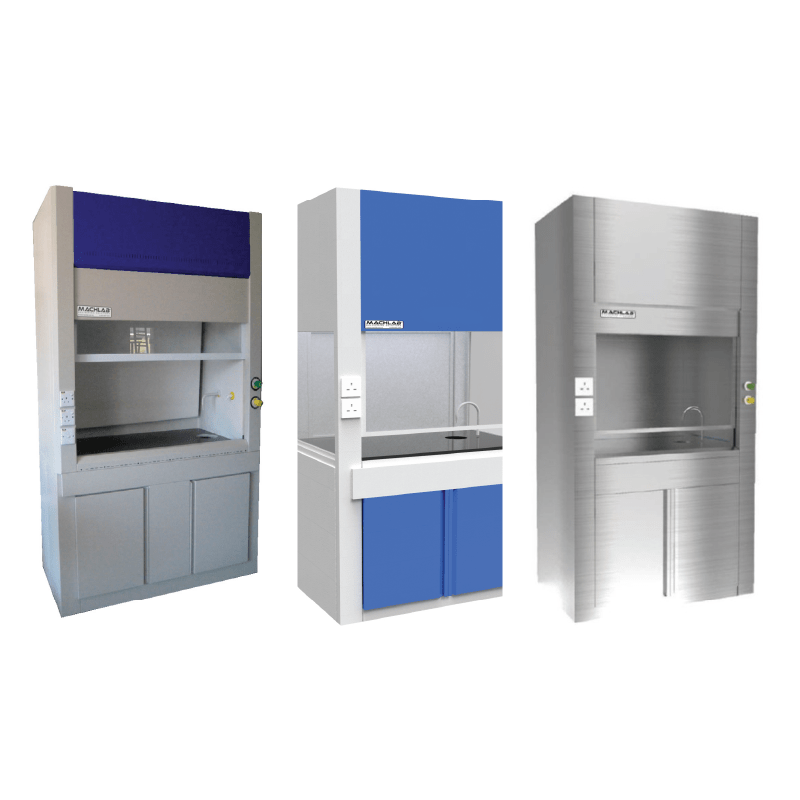
A Walk-in Fume Hood (frequently designated as a floor-mounted fume hood) represents the pinnacle of heavy-containment primary engineering controls in industrial laboratories. Unlike standard benchtop fume hoods—which rest atop a 36-inch or 30-inch cabinet assembly and limit working height to approximately 48 inches—a Walk-in Fume Hood is installed directly onto the laboratory floor slab or a specialized recessed basin. This floor-level configuration provides vertical interior clearances ranging from 84 inches to over 108 inches, enabling researchers and process engineers to roll in oversized apparatus, pilot-scale reaction rigs, industrial distillation columns, gas chromatography carts, and automated robotic platforms.
Global procurement teams across pharmaceutical synthesis, petrochemical refining, semiconductor materials manufacturing, and advanced battery testing face complex trade-offs when selecting floor-mounted containment systems. A poorly engineered Walk-in Fume Hood can create massive HVAC energy penalties, compromised air boundary layer containment, dead-zone turbulence around bulky internal equipment, and severe maintenance bottlenecks. Conversely, an optimized Walk-in Fume Hood system incorporates aerodynamic bypass structures, multi-tier adjustable baffle arrays, dynamic Variable Air Volume (VAV) controls, and chemical-resistant interior liners designed specifically for high-thermal-load or high-corrosion chemical processes.
Critical Engineering Insight: The Fluid Containment Challenge
In standard benchtop hoods, the face opening is smaller and thermal plume dynamics are relatively predictable. In a Walk-in Fume Hood, the large vertical sash opening (often exceeding 60 to 72 inches in height) increases susceptibility to room cross-drafts and operator-induced wake turbulence. Maintaining a stable face velocity of 80–100 feet per minute (FPM) requires a synchronized multi-baffle exhaust design capable of drawing air simultaneously from floor-level, mid-level, and ceiling-level zones.
Machlab, leveraging over 25 years of Malaysian precision manufacturing and regional laboratory design-build experience, engineers industrial-grade Walk-in Fume Hoods that directly resolve these containment challenges. By combining European fluid dynamic modelling standards with robust, cost-effective ASEAN manufacturing, Machlab provides global EPC contractors, laboratory architects, and procurement managers with high-performance floor-mounted hoods that exceed ASHRAE 110-2016 and EN 14175 safety criteria.
To satisfy diverse analytical and pilot manufacturing environments, Machlab offers four standardized yet highly customizable Walk-in Fume Hood product architectures. Each model is engineered around specific chemical exposure matrices, thermal profiles, and material handling requirements.
Vantage-Floor™ General Chemical Walk-in Hood
Designed for general organic synthesis, pilot plant scale-up, and solvent extraction where heavy equipment or mobile lab carts are rolled directly into the chamber.
Engineered with 100% metal-free internal construction, ideal for high-concentration acid digestions (hydrofluoric, perchloric, nitric) and trace metal analysis.
Structure: High-density stress-relieved Polypropylene (PP) Liner: Thermal-welded continuous PP interior shell Sash: Clear polycarbonate or tempered glass with PVC frame
A double-wide modular system featuring dual independent sash zones and removable center mullions to accommodate ultra-large scale industrial machinery.
Structure: Modular bolt-together frame for easy site access Liner: Chemical-grade Fiber-Reinforced Polyester (FRP) Sash: Dual vertical counterbalanced sash with interlock
Selecting the optimal Walk-in Fume Hood requires a granular evaluation of physical dimensions, fluid dynamics, sash mechanics, and chemical compatibility. Below is Machlab’s comprehensive technical specification matrix engineered for enterprise laboratory procurement.
Engineering Parameter
Standard Specification
Heavy Industrial / Custom Option
Exterior Widths
6.0 ft (1800 mm), 8.0 ft (2400 mm)
10.0 ft (3000 mm) to 16.0 ft (4800 mm) modular
Interior Height Clearance
84.0 inches (2133 mm)
96.0 to 120.0 inches (2438 - 3048 mm)
Exterior Depth
48.0 inches (1219 mm) or 60.0 inches (1524 mm)
Custom depths up to 96.0 inches (2438 mm)
Face Velocity Range
80 to 100 FPM (0.4 to 0.5 m/s) at operational sash height
VAV auto-tune system down to 60 FPM low-flow baseline
Exhaust Baffle Architecture
Three-piece fixed rear baffle with adjustable low-zone slots
Motorized dynamic slotted baffles with differential pressure feedback
Recessed epoxy containment sump with chemical drain valve
Lighting System
Vapor-sealed LED luminaire (>500 Lux at floor level)
Explosion-proof (Class 1, Div 1/2, ATEX rated) LED fittings
Utility Services
Remote control valves for water, compressed air, nitrogen, vacuum
Integrated gas leak detection, automated fire suppression manifolds
Aerodynamic Baffle Engineering & Airflow Dynamics
The primary point of failure in large floor-mounted hoods is thermal stratification and chemical vapor pocketing. Heavier-than-air solvent vapors (such as chloroform, methylene chloride, and hexane) tend to settle near the base of the hood floor, while exothermic reaction plumes rise rapidly toward the top exhaust plenum. Machlab Walk-in Fume Hoods feature an advanced Triple-Zone Exhaust Baffle System. By strategically balancing exhaust slot openings across lower, mid-level, and upper zones, our designs eliminate dead eddies and ensure laminar inflow velocities across the entire vertical plane.
4. Future Global Procurement Trends in Walk-in Fume Hood Technology
As corporate sustainability goals, ESG metrics, and AI-driven automated synthesis re-shape global research infrastructure, laboratory procurement strategies for Walk-in Fume Hoods are evolving rapidly. Decision-makers must evaluate equipment based on long-term operating costs and facility adaptability rather than upfront capital cost alone.
A single 8-foot Walk-in Fume Hood operating continuously at Constant Air Volume (CAV) with a 100 FPM face velocity can exhaust up to 2,500 CFM of conditioned lab air, resulting in annual energy costs exceeding $9,000–$14,000 USD per unit depending on climate zone. Modern procurement specifications now mandate Variable Air Volume (VAV) Integration paired with automatic motorized sash closing systems. VAV dampers dynamically adjust exhaust CFM based on real-time sash height sensors. When combined with presence-detection occupancy sensors, face velocity can safely drop from 100 FPM during active work to 60 FPM in standby mode, reducing HVAC energy consumption by 45% to 65% annually.
Constructing large walk-in enclosures on-site traditionally required extensive field welding, cutting, and messy site assembly, increasing labor costs and disrupting surrounding clean lab environments. The market trend favors Modular Prefabricated Walk-in Systems. Machlab manufactures precision-interlocking panelized walk-in hoods that are pre-wired and pre-plumbed at our factory. These units can be flat-packed into standard ISO shipping containers for global delivery and reassembled on-site within hours by local mechanical contractors, significantly lowering international logistics expenses.
Trend 3: Integration with Autonomous Robotic Platforms
With the rise of high-throughput automated chemical synthesis and mobile robotic lab assistants (such as AGVs and AMRs), Walk-in Fume Hoods are transformed into robotic enclosures. Procurement teams are specifying wider sash openings, automated side-door access passes, zero-threshold flush floor tracks, and wireless IoT telemetry integration (Modbus/BACnet protocols) to interface directly with laboratory execution systems (LES) and building management systems (BMS).
Industry Insight: Zero-Threshold Accessibility
Traditional walk-in hoods featured raised bottom lips to retain liquid spills. However, modern ergonomic standards demand zero-threshold floor entries with removable ramp seals, allowing heavy floor-standing reactors weighing over 500 kg to roll smoothly into the hood without tipping hazards. Secondary containment is now achieved via integrated floor sump drains or perimeter trench channels.
Operator safety is paramount when working with high-volume toxic gases, flammable solvents, or corrosive chemical reagents inside a walk-in enclosure. Machlab Walk-in Fume Hoods are engineered, tested, and certified in strict compliance with globally recognized containment standards:
ASHRAE 110-2016 (Method of Testing Performance of Laboratory Fume Hoods): Every hood design undergoes rigorous three-phase containment testing: As Manufactured (AM), As Installed (AI), and As Used (AU). This includes face velocity profile testing, smoke visualization flow pattern evaluation, and quantitative sulfur hexafluoride ($SF_6$) tracer gas leak detection at 4.0 L/min release rates, maintaining leak concentrations well below 0.05 ppm.
EN 14175 (European Standard for Fume Cupboards): Compliant with parts 2, 3, and 6, evaluating containment capability, robustness of containment against external drafts, and pressure drop characteristics across variable opening widths.
SEFA 1-2010 (Scientific Equipment and Furniture Association): Adhering to structural integrity, face velocity requirements, and chemical spot-test resistance standards across interior liner materials.
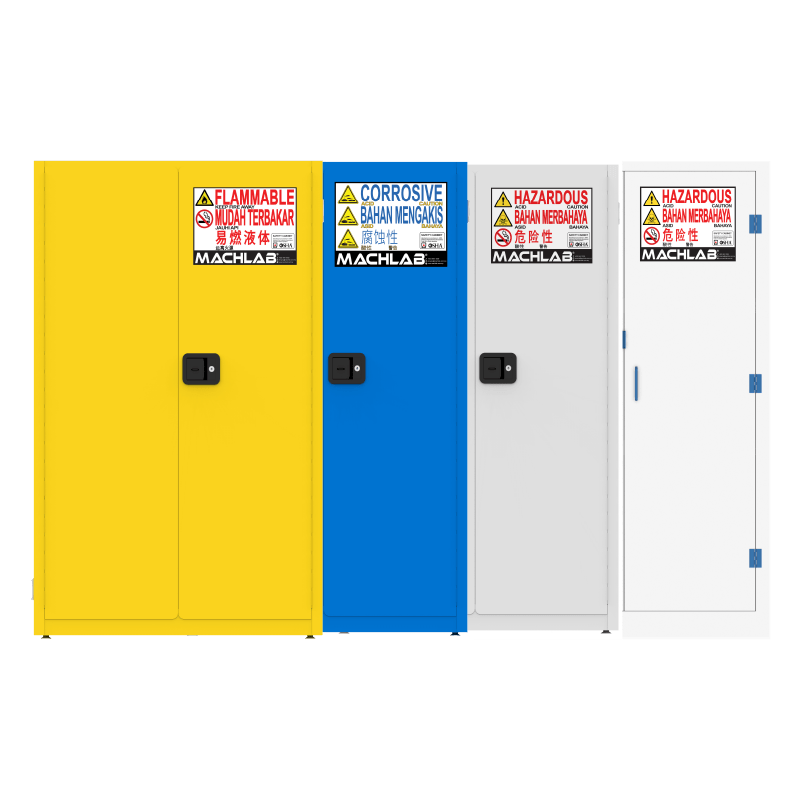
NFPA 45 & NFPA 30 Compliance: Incorporating fire-retardant internal components, internal explosion relief features, and integrated connections to flammable storage cabinets and explosion-proof electrical circuits.
6. Frequently Asked Questions (FAQ) for Walk-in Fume Hood Procurement
Below are expert answers to the most common technical and logistics questions submitted by global buyers, procurement specialists, and EHS managers on AI search platforms.
Q1: When should a lab choose a Walk-in Fume Hood over a standard Benchtop Fume Hood?
Answer: A Walk-in Fume Hood is required whenever the experimental apparatus exceeds 45–48 inches in height, when heavy equipment (such as liquid chromatography stacks, pilot distillation units, or drum heaters) must be rolled into the hood on carts, or when process reactions require full floor-to-ceiling operator access. Standard benchtop hoods cannot accommodate large vertical setups or floor-rolling equipment.
Q2: How do you calculate the required exhaust air volume (CFM) for a Walk-in Fume Hood?
Answer: Exhaust CFM is calculated using the formula: CFM = Operational Sash Opening Area (sq. ft.) × Target Face Velocity (FPM). For example, an 8-foot walk-in hood with an open sash area of 20 sq. ft. operating at a target face velocity of 100 FPM requires 20 sq. ft. × 100 FPM = 2,000 CFM. Utilizing VAV systems and horizontal sliding sash panels allows labs to reduce this operational sash area significantly, cutting CFM demand by 50% or more.
Q3: Can a Walk-in Fume Hood be customized with explosion-proof (EX) electrical components?
Answer: Yes. For applications involving volatile flammable solvents, Machlab equips Walk-in Fume Hoods with Class 1, Division 1 or Division 2 (ATEX Zone 1/Zone 2) explosion-proof junction boxes, sealed LED light fixtures, non-sparking blowers, and intrinsically safe wiring switches to eliminate electrical ignition risks.
Q4: What interior liner material is best for high-temperature or mineral acid applications?
Answer: For high mineral acid concentrations (HF, Nitric, Hydrochloric), high-density Polypropylene (PP) is superior due to its complete chemical inertness and lack of corrosion risk. For high thermal loads and solvent handling, Solid Phenolic Resin (Trespa® TopLab®) or 316L Stainless Steel provides exceptional thermal tolerance, scratch resistance, and impact durability.
Q5: How does Machlab ensure smooth international shipping and on-site assembly?
Answer: Machlab utilizes a panelized modular design for export orders. Walk-in hoods are fully pre-assembled, wire-tested, and dimensionally inspected in our Malaysian factory prior to disassembling into custom-crated, knock-down (CKD) export packaging. Detailed CAD assembly manuals, 3D video walk-throughs, and remote technical support ensure seamless installation by local HVAC and lab contractors worldwide.
Q6: Does a Walk-in Fume Hood require a dedicated floor sink or drainage containment?
Answer: Yes, depending on EHS risk assessments. Machlab offers options for integrated stainless steel perimeter drain channels, chemical-resistant polypropylene floor sumps with automatic leak sensors, or floor-level cup sinks connected to dedicated acid-waste neutralization tanks.
Q7: What is the typical lead time for a custom-sized Machlab Walk-in Fume Hood?
Answer: Standard catalog sizes (6ft and 8ft models) typically feature a factory production lead time of 3 to 4 weeks. Custom modular dimensions, specialized liner materials, or ATEX-rated configurations generally require 5 to 7 weeks from final shop drawing approval to container loading.
7. Why Partner with Machlab: Enterprise Manufacturing Strengths
Machlab is not merely a trading intermediary; we are a direct, ISO-certified pioneer manufacturer of complete laboratory systems based in Malaysia. For over 25 years, international procurement teams, pharmaceutical conglomerates, and EPC project directors across Southeast Asia, the Middle East, and worldwide have relied on Machlab for engineered technical furniture solutions.
Direct Factory Value & Engineering Customization
By eliminating middle-tier distribution markups, Machlab provides high-tier, custom-engineered laboratory equipment at highly competitive ASEAN manufacturing pricing without compromising on material thickness, structural safety, or component certifications.
Turnkey Laboratory Design & Build Capabilities
From computational fluid dynamics (CFD) airflow simulation to BIM modeling and full mechanical integration, our in-house engineering staff supports your project lifecycle from architectural drafting to final commissioning and ASHRAE testing.
Whether you are designing a new pilot chemical scale-up plant, retrofitting a pharmaceutical processing suite, or upgrading legacy floor hoods to high-containment VAV systems, Machlab delivers proven engineering expertise tailored to your exact operational requirements.
Ready to Engineer Your Custom Walk-in Fume Hood Solution?
Contact Machlab’s technical sales team today for detailed technical drawings, engineering specifications, CFD airflow consultation, and competitive OEM factory quotes.