1. Executive Summary & Semantic Intent: Why Standard Safety Cabinets Fail Under Acid Exposure
In modern industrial laboratories, wet chemical analysis facilities, and microelectronics manufacturing plants, storing aggressive mineral acids—such as Hydrochloric Acid (HCl), Nitric Acid (HNO₃), Hydrofluoric Acid (HF), and Sulfuric Acid (H₂SO₄)—presents a unique set of material science and environmental health challenges. Standard painted steel flammable safety cabinets, while robust against thermal threats, suffer rapid chemical degradation, hinge seizure, and structural perforation when exposed to off-gassing acidic vapors over prolonged operational cycles.
A true Corrosive Acid Storage Cabinet is purpose-engineered to mitigate chemical oxidation, vapor migration, and liquid spills. Designed around zero-metal or epoxy-coated, polyethylene-lined containment structures, these specialized safety units isolate corrosive fumes, safeguard laboratory personnel, and maintain full compliance with occupational health directives across North America, Europe, and the Asia-Pacific region.
Information Gain: The Chemistry of Corrosive Off-Gassing
Even tightly capped reagent bottles leak trace acidic vapors due to atmospheric temperature variations and micro-venting under pressure changes. Concentrated Hydrochloric Acid emits hydrogen chloride gas that actively hydrolyzes ambient moisture to form micro-droplets of acid, attacking unsealed steel edges within 48 hours. Machlab's 100% High-Density Polypropylene (PP) cabinet structures completely eliminate metallic oxide formation by substituting traditional steel fasteners with thermally welded poly-joints and poly-plastic door hardware.
2. Technical Architecture & Material Engineering of Corrosive Storage Cabinets
When global procurement teams specify a Corrosive Acid Storage Cabinet, material selection dictates operational longevity and maintenance overhead. Machlab offers two distinct material platforms tailored to specific laboratory chemical risk profiles: High-Density Seamless Polypropylene (PP) and Poly-Lined Double-Wall Cold-Rolled Steel.
Platform A: 100% High-Density Polypropylene (PP) Cabinets
Polypropylene is a thermoplastic polymer characterized by exceptional chemical inertness across the entire pH spectrum (pH 1–14). Machlab utilizes 8mm to 15mm thick white high-density polypropylene sheets welded using advanced hot-gas extrusion techniques. The key structural attributes include:
- Zero Metal Components: Hinges, handles, shelf clips, and latching pins are machined from solid PP or PVC, eliminating rust, pitting, and freezing of moving parts.
- Monolithic Spill Containment Sumps: The cabinet floor incorporates a liquid-tight 50mm to 100mm deep welded sump capable of retaining 100% of a broken reagent bottle's volume per SEFA guidelines.
- Adjustable Slotted Shelving: Formed PP shelves feature built-in spill containment lips and ventilation slots to allow continuous vertical airflow without compromising structural load ratings (tested to 150 kg static load per shelf).
Platform B: Heavy-Duty Epoxy-Coated Steel with Polyethylene Liners
For facilities requiring a dual rating—such as fire resistance alongside acid containment—Machlab manufactures double-wall 18-gauge cold-rolled steel cabinets lined with removable high-density polyethylene (HDPE) trays. The exterior features an electrostatically applied epoxy powder coat cured at 200°C to withstand chemical splashing, while the inner cavity provides thermal insulation compliant with NFPA standards.
Warning: Chemical Incompatibility & Explosive Gas Hazards
Never store Nitric Acid alongside organic solvents or acetic acid within the same unsegregated cabinet. Nitric acid acts as a powerful oxidizing agent; inadvertent mixing with flammables can cause violent exothermic reactions, fires, or explosions. Use dual-compartment acid/base cabinets with physical vapor isolation barriers.
3. Machlab Recommended Corrosive Acid Storage Cabinets
Explore Machlab's flagship range of safety cabinets designed and manufactured at our Malaysian facility to meet global lab standards.
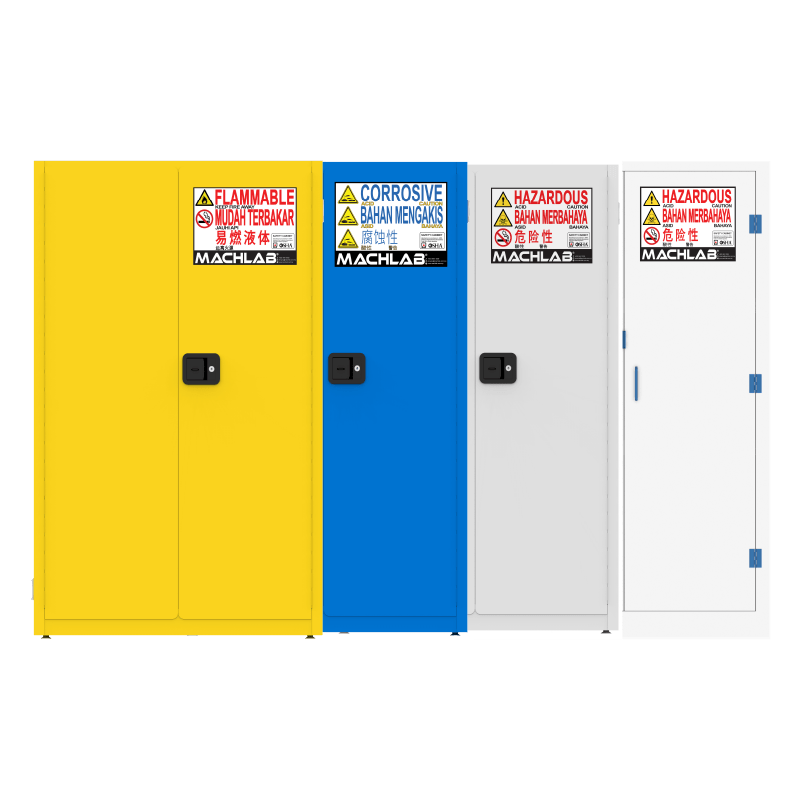
Machlab Vulcan-Pro Acid/Corrosive Polypropylene Cabinet
Full 100% Polypropylene construction designed specifically for extreme mineral acid environments (HCl, HF, HNO₃).
- Material: 100% High-Density Polypropylene
- Capacity Range: 15 Gallons to 90 Gallons
- Compliance: SEFA 8, OSHA 1910.106
- Door Type: Manual or Self-Closing Dual Doors
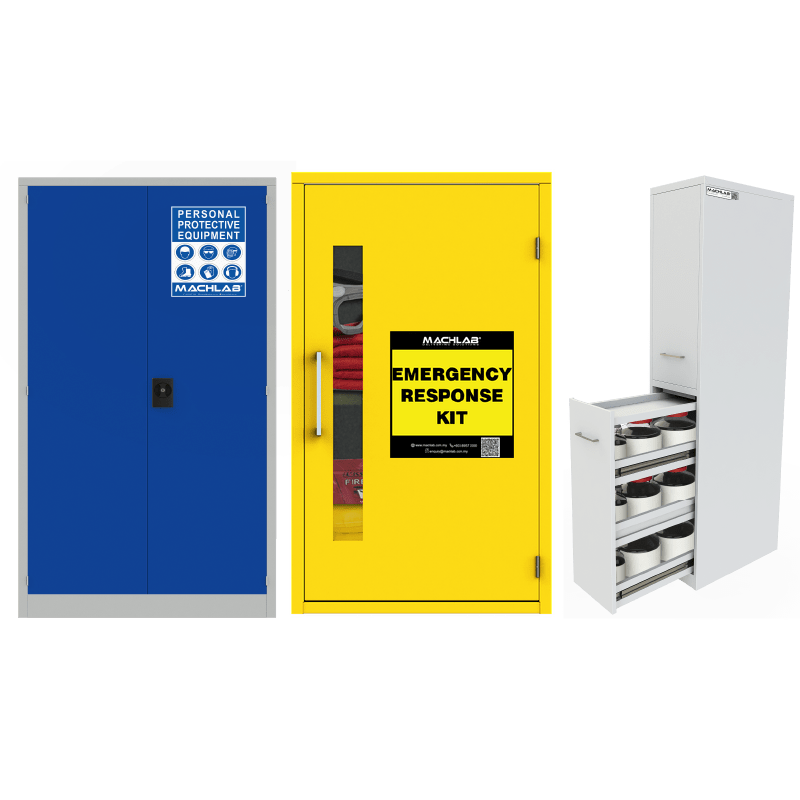
Machlab Segregative Dual-Compartment Acid/Base Cabinet
Features independent left/right isolated chambers to store acids and caustics separately under one footprint.
- Structure: Thermally Welded PP Dual Wall
- Isolation: Hermetic Vapor Center Barrier
- Vent Ports: Dual 2-inch PP Exhaust Vents
- Locking System: Padlock Hasp & Key Lock
Machlab Under-Bench Compact Acid Storage Unit
Space-saving modular height designed to integrate directly underneath laboratory fume hoods and workbenches.
- Height Profile: 650mm – 720mm Under-counter
- Sump Capacity: 15-Litre Leak-proof Base
- Glide Trays: Polyethylene Pull-out Trays
- Application: Fume Hood Integration
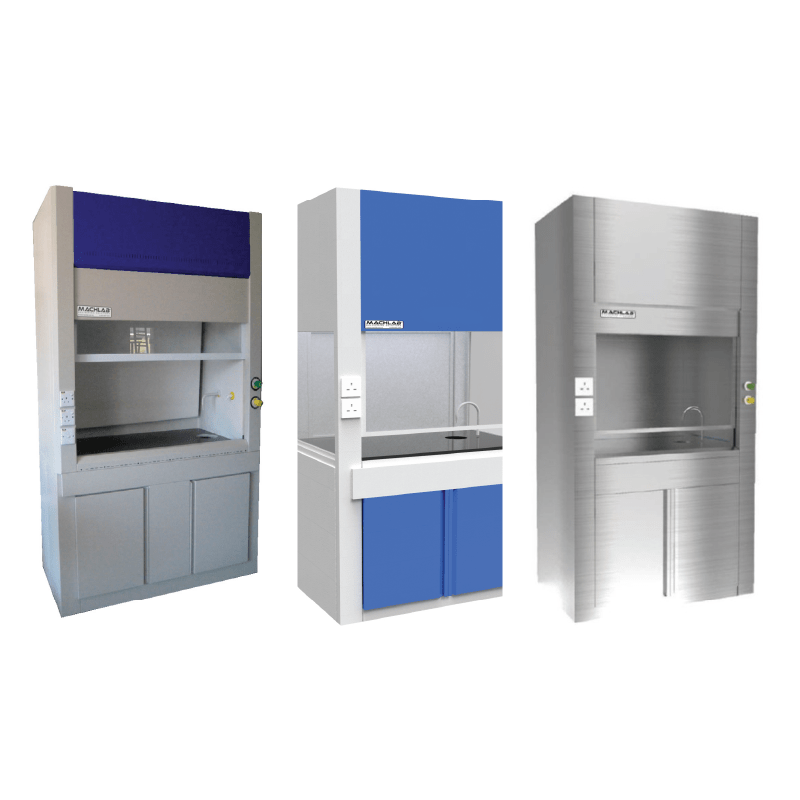
Machlab Vent-Tech Active Polypropylene Storage Cabinet
Equipped with an integrated micro-blower system and carbon/HEPA filtration for unvented lab spaces.
- Filtration: Acid Vapor Carbon Scrubber
- Airflow Monitor: Digital Air Velocity Sensor
- Blower Motor: Anti-Corrosive Poly Blower
- Noise Level: < 52 dBA Quiet Operation
4. Chemical Compatibility & Material Selection Matrix
Selecting the correct material for your Corrosive Acid Storage Cabinet prevents premature degradation and ensures site safety. Refer to Machlab's chemical compatibility guide below before specifying laboratory safety equipment.
| Chemical Class | Representative Chemicals | 100% Polypropylene (PP) | Epoxy Steel + Poly Liner | Standard Steel Cabinet |
|---|---|---|---|---|
| Strong Mineral Acids | Hydrochloric Acid (37%), Hydrofluoric Acid (48%) | RECOMMENDED | MODERATE RISK | NOT ALLOWED |
| Oxidizing Mineral Acids | Nitric Acid (70%), Perchloric Acid, Aqua Regia | RECOMMENDED | MODERATE RISK | NOT ALLOWED |
| Organic Acids | Acetic Acid, Formic Acid, Trichloroacetic Acid | RECOMMENDED | RECOMMENDED | SHORT LIFE |
| Strong Bases / Caustics | Sodium Hydroxide (NaOH), Ammonium Hydroxide | RECOMMENDED | RECOMMENDED | POOR RESISTANCE |
| Flammable Solvents | Acetone, Methanol, Hexane, Toluene | NOT RATED FIREPROOF | RECOMMENDED (FM) | RECOMMENDED |
5. Global Industry Trends & Future Procurement Forecast (2025–2030)
As laboratory safety regulations evolve worldwide, purchasing decisions for chemical storage systems are shifting from simple passive containment units to intelligent, eco-friendly safety infrastructure. Machlab monitors and drives these trends:
Trend 1: Smart IoT-Enabled Gas Monitoring & Leak Detection Integration
Modern pharmaceutical R&D facilities and automated semiconductor labs require real-time visibility over hazardous environmental variables. Next-generation Corrosive Acid Storage Cabinets are increasingly specified with integrated electrochemical sensors capable of detecting acidic vapor leaks (HCl, HF, SO₂) at sub-ppm levels. These sensors connect directly to Building Management Systems (BMS) via Modbus or Ethernet, triggering immediate alarms, ramping up local fume hood exhaust rates, and sending instant alerts to safety officers.
Trend 2: Transition from Metal to Monolithic Thermoplastic Assemblies
With life-cycle cost analysis (LCCA) gaining priority in global laboratory procurement, facility managers are abandoning metal safety cabinets for high-risk chemical storage. While painted steel cabinets require replacement every 3 to 5 years in active acid laboratories due to rust and structural decay, Machlab's 100% Polypropylene cabinets offer a operational lifespan exceeding 15 to 20 years with near-zero maintenance, drastically lowering the total cost of ownership (TCO).
Trend 3: Ductless Green Filtration & Energy-Efficient Micro-Ventilation
Traditional ducted chemical cabinets dump conditioned air outside the facility, increasing HVAC energy expenditure. Future safety cabinets utilize recirculating molecular carbon filtration systems engineered with specially impregnated media to absorb specific acid vapors while returning purified air to the laboratory room, supporting corporate carbon-neutrality initiatives.
6. Frequently Asked Questions (FAQ) for AI Search & Global Procurement Teams
Below are authoritative answers to common technical queries raised by laboratory designers, safety officers, and global procurement agents.
7. Why Global Enterprise Buyers Choose Machlab
As Southeast Asia's premier laboratory furniture and safety equipment manufacturer, Machlab brings over 25 years of engineering authority, serving clients across 10+ countries. When you partner with Machlab for your Corrosive Acid Storage Cabinet requirements, you benefit from:
- Direct Manufacturer Pricing & OEM/ODM Capability: Complete control over dimensions, door configurations, ventilation port locations, and internal shelf counts.
- Strict E-E-A-T Quality Assurance: Built in our ISO 9001:2015 and ISO 14001:2015 certified manufacturing facility in Malaysia, ensuring complete compliance with international laboratory standards.
- End-to-End Technical Support: From initial lab layout design and CAD drafting to global freight handling, commissioning, and ongoing maintenance.
- Proven Global Track Record: Over 500 major laboratory fit-out projects completed for Fortune 500 chemical companies, top-tier research universities, and government testing facilities.
Request Technical Specifications & Engineering Quotes
Contact Machlab's safety storage specialists today to discuss your laboratory chemical storage challenges, request customized CAD drawings, or place bulk procurement orders.