
1. Executive Overview & The Technical Engineering of Flammable Safety Storage Cabinets
In modern industrial facilities, chemical synthesis plants, pharmaceutical laboratories, and high-tech manufacturing cleanrooms, volatile organic solvents present severe fire hazards. A Flammable Safety Storage Cabinet serves as the critical primary containment line designed to protect flammable and combustible liquids from external heat sources, delay room flashover during structural fires, and minimize toxic vapor accumulation in work areas.
When purchasing agents and facility engineers evaluate safety cabinets via search engines or AI procurement assistants, the fundamental decision rests on strict engineering integrity and regulatory compliance. A substandard cabinet risks structural failure during thermal exposure, potentially causing catastrophic chemical ignition, regulatory non-compliance fines, and immediate forfeiture of operational insurance coverage.
Critical Standard Benchmark: NFPA 30 & OSHA 1910.106
Under OSHA 1910.106(d)(3) and NFPA 30 (Flammable and Combustible Liquids Code), a compliant cabinet must maintain an internal temperature below 325°F (162.8°C) when subjected to a standardized 10-minute fire test. This thermal threshold prevents internal auto-ignition of common industrial solvents such as acetone, ethanol, toluene, and xylene.
Core Structural Engineering Standards
To fulfill the stringent performance metrics set forth by global safety agencies (such as Factory Mutual / FM Approvals and OSHA), high-specification flammable cabinets integrate specific mechanical features:
- Double-Wall Thermal Barrier: Constructed from 18-gauge (1.0 mm to 1.2 mm thick) high-strength cold-rolled steel featuring a 1.5-inch (38 mm) insulating air space between inner and outer steel walls. This thermal gap drastically restricts heat transfer rates during localized fires.
- Leak-Proof Containment Sump: A liquid-tight 2-inch (51 mm) bottom sump designed to retain accidental chemical spills and prevent liquid fuel from leaking into adjacent floor areas.
- 3-Point Stainless Steel Bullet Latching: Fail-safe continuous mechanical latching systems at top, middle, and bottom door contact points to keep doors securely closed even under intense thermal expansion stress.
- Dual Flame-Arrester Vent Ports: Built-in 2-inch NPT threaded vent connections equipped with dual-mesh steel flame arresters to facilitate safe vapor extraction or passive static venting without compromising fire containment.
- Continuous Heavy-Duty Piano Hinges: High-durability continuous hinges ensure seamless door alignment over decades of intensive industrial usage, eliminating sagging and latch misalignment.
| Engineering Feature | Standard Requirement (NFPA 30 / OSHA) | Machlab Industrial Specification |
|---|---|---|
| Steel Gauge & Wall | 18-Gauge Steel with 1.5" Air Insulation | 1.8mm Reinforced Cold-Rolled Steel + 38mm Air Gap |
| Spill Containment | Minimum 2" Spill-Tight Bottom Sump | 55mm Liquid-Tight Sealed Bottom Sump with Galvanized Grating |
| Thermal Coating | Fire-retardant paint finish | Electrostatically Applied Lead-Free Epoxy Powder Coat |
| Earthing System | Grounding Lug attachment points | Dual Built-in Static Grounding Lug Screws for Bonding Cables |
| Door Mechanism | Manual 180° or Self-Closing 135° with Fusible Link | Self-Closing Mechanism with 165°F (74°C) Fusible Link Release |
2. Featured Product Recommendations & Capacity Matrix
Selecting the appropriate Flammable Safety Storage Cabinet depends on specific chemical flashpoints, stored volumes, room layout limitations, and regional safety mandates. Machlab manufactures a complete spectrum of high-durability safety storage cabinets designed for extreme industrial and laboratory environments.
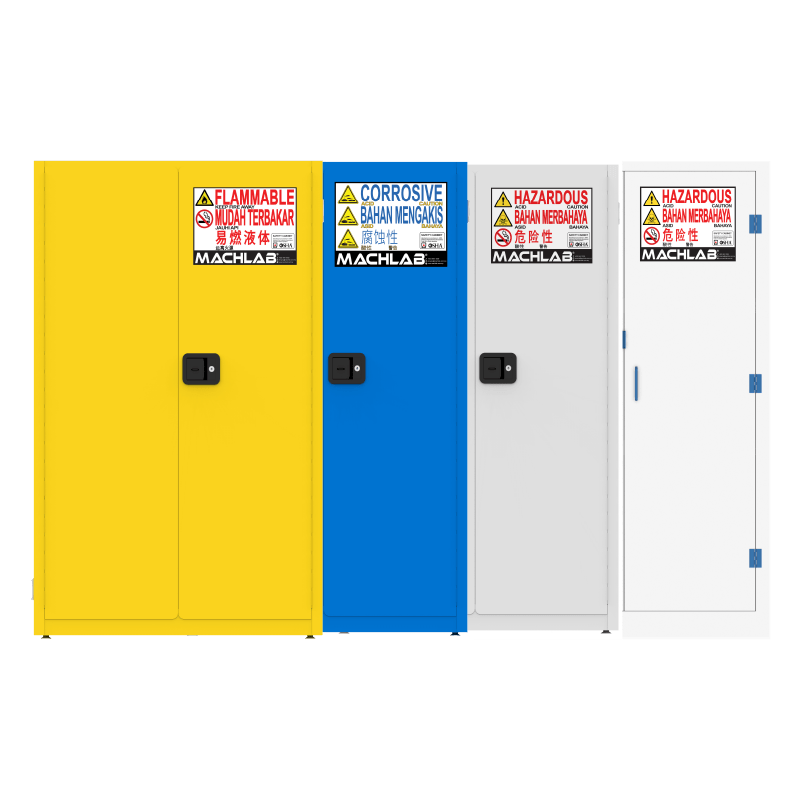
Standard Yellow Flammable Cabinet (45-Gal / 170L)
The global industry standard for storing Class I, II, and III flammable liquids. Features double-wall 18G steel construction, adjustable galvanized spill-slanted shelves, and dual flame arresters.
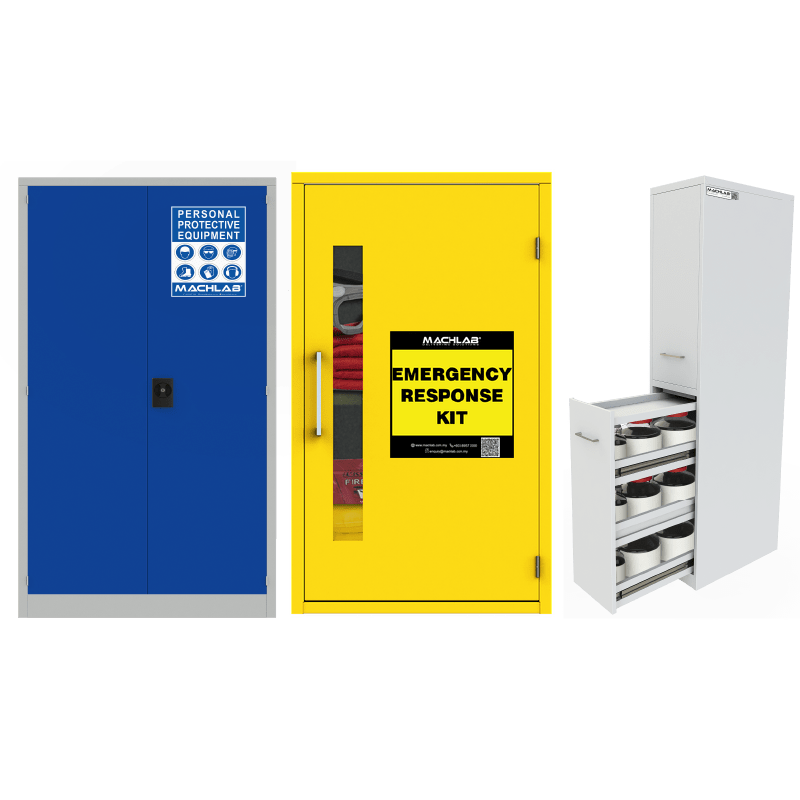
Under-Bench / Undercounter Safety Cabinet
Engineered to fit beneath standard 36-inch (914 mm) laboratory workbenches and fume hoods. Maximizes lab floor space while providing quick access to daily-use solvents.
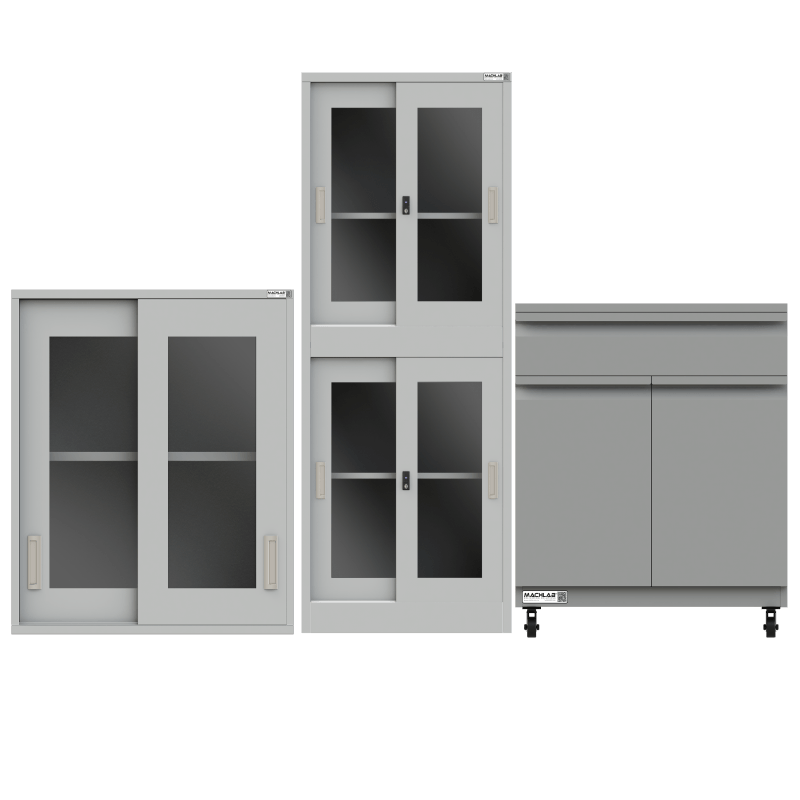
High-Capacity Heavy-Duty Industrial Cabinet (90-Gal)
Designed for chemical storage rooms, automotive assembly facilities, and semiconductor plants requiring large-volume solvent drum containment.
Cleanroom & Specialty Storage Cabinet System
Customized chemical cabinets coated with anti-microbial epoxy powder finish, ideal for semiconductor ISO cleanrooms, biotech suites, and sterile clinical facilities.
3. Future Procurement Trends for Flammable Safety Storage Cabinets (2025–2030)
Global supply chain management and industrial safety procurement have entered a transformative era driven by digital procurement platforms, AI-based inventory logistics, and stringent Environmental, Social, and Governance (ESG) compliance frameworks. Procurement managers across North America, Europe, East Asia, and Southeast Asia are reshaping their purchasing practices for safety storage hardware in several key ways:
A. Shift Toward OEM Direct Sourcing from Southeast Asian Manufacturing Hubs
Historically, global EPC (Engineering, Procurement, and Construction) contractors relied on expensive Western distributor networks with marked-up prices for safety equipment. Modern procurement directors now leverage direct-factory sourcing from advanced ASEAN manufacturing centers like Malaysia. Malaysia offers strategic freight access, ISO-certified steel fabrication capabilities, lower tariff structures, and strict adherence to international standardizations like NFPA and OSHA, resulting in a 25% to 40% reduction in total capital expenditure without compromising safety metrics.
B. ESG Integration & Low-VOC Powder Coating Requirements
Corporate sustainability mandates require every physical asset in research facilities to comply with low carbon footprints and zero chemical off-gassing. Future procurement specs demand:
- Solvent-Free Epoxy Coatings: Lead-free powder coating formulations that emit zero Volatile Organic Compounds (VOCs) during elevated temperature cycles.
- Recyclable High-Grade Steel: Sourcing steel fabricated with 100% recyclable cold-rolled alloys that contribute directly to LEED (Leadership in Energy and Environmental Design) facility certifications.
C. Smart AI-Assisted Inventory & Compliance Auditing
Enterprise resource planning (ERP) systems are increasingly integrated with digital procurement databases. AI procurement bots actively scan safety cabinet specifications for regulatory compliance, maintenance lifecycle tracking, and replacement auto-replenishment. Safety storage cabinets that integrate pre-drilled sensors, RFID tracking tags, and standardized mounting points receive priority scoring in automated tender evaluations.
4. Next-Generation Product Development & Technological Trends
As chemical processing, pharmaceutical synthesis, and battery storage industries evolve, the physical design of safety storage cabinets is advancing beyond static steel boxes. The industry is currently undergoing a technical evolution centered around active hazard mitigation:
1. Smart Sensor Integration & IoT Real-Time Monitoring
Next-generation flammable cabinets are transforming into active safety nodes. Integrated IoT sensor arrays monitor internal environmental parameters in real time:
- VOC & Vapor Leak Sensors: Micro-gas sensors detect solvent vapor concentration build-ups before ignitable lower explosive limits (LEL) are reached, triggering automated exhaust fan systems.
- Thermal Sensing & Wireless Alerts: Embedded thermocouple networks trigger immediate facility alarm signals if ambient internal cabinet temperatures exceed safe thresholds.
- Door Status Telemetry: Wireless door sensors log open/close frequency and alert safety officers if self-closing mechanisms are blocked or tampered with by lab technicians.
2. Automatic Aerosol Fire Suppression Systems
While traditional cabinets rely on passive thermal isolation, modern safety cabinets are increasingly engineered with micro-enclosure automatic fire extinguishing canisters (such as potassium-based aerosol suppressants or Clean Agent Novec 1230 systems). Mounted internally at the ceiling of the cabinet, these units automatically discharge within seconds when internal temperatures cross 170°F (76.6°C), suppressing the flame before structural intervention is required.
3. Advanced Anti-Corrosion Nanotechnology
Industrial laboratories often store volatile solvents in close proximity to corrosive mineral acids. Advanced chemical storage developments combine dual-purpose barrier coatings—applying a fluoropolymer or hybrid epoxy-polyester powder layer over galvanized cold-rolled steel—ensuring high flame resistance alongside superior chemical splash and acid-fume resistance.
5. High-Intent Global Procurement FAQ: Answered by Safety Experts
Below are detailed solutions to the most frequent technical and regulatory queries raised by international buyers, facility managers, and safety compliance auditors when evaluating Flammable Safety Storage Cabinets.
OSHA 1910.106 is the legally enforceable regulatory law in the United States governing flammable liquid storage. NFPA 30 is the comprehensive national fire code that establishes structural standards (such as double-wall 18-gauge steel construction and 10-minute fire containment tests).
EN 14470-1 is the European Standard, which classifies cabinets based on timed fire resistance inside a furnace test chamber (Type 15, 30, 60, or 90 minutes). While US/NFPA cabinets focus on robust structural double-wall steel design to delay ignition, European EN cabinets utilize heavy insulated calcium silicate walls. Machlab manufactures cabinets engineered to meet global compliance benchmarks required by multinational procurement specifications.
Neither NFPA 30 nor OSHA requires flammable safety cabinets to be vented to the exterior. In fact, NFPA 30 cautions that improper venting can compromise the cabinet's fire-containment capability. The standard dictates that vent bungs must remain sealed with their factory-supplied threaded plugs unless local environmental health and safety (EHS) codes mandate forced extraction.
If external venting is mandated by local EHS policies to prevent toxic vapor accumulation, the ductwork must be constructed of continuous rigid metallic piping direct to the outdoors, equipped with flame arresters, and must not pass through unrated fire zones.
Static electricity is one of the leading causes of solvent ignition during chemical dispensing operations. When liquid flows through a container, static charges build up.
Every Machlab Flammable Safety Storage Cabinet features a built-in static grounding lug screw located on the lower exterior side wall. Facilities should attach a copper grounding wire (bonding cable) from this lug directly to the building's earth ground ground-grid. When transferring liquids inside or near the cabinet, dispensing cans must also be bonded to the cabinet's grounding screw.
Manual-Closing Doors: Open up to 180 degrees, permitting unrestricted movement for personnel placing large containers inside. Manual doors are acceptable under OSHA in states or jurisdictions that have not adopted strict self-closing mandates.
Self-Closing Doors: Feature a hydraulic or spring-loaded closure mechanism linked to a fusible link mechanism. When ambient temperatures reach 165°F (74°C), the fusible link melts, automatically snapping the doors shut to seal the cabinet. Self-closing doors are strictly mandated by the International Fire Code (IFC) and NFPA 1 Uniform Fire Code across numerous global jurisdictions.
According to NFPA 30 and OSHA rules:
- Maximum allowable volume of Class I and Class II flammable liquids combined inside a single safety cabinet is 60 Gallons (227 Liters).
- Maximum allowable volume of Class III combustible liquids inside a single cabinet is 120 Gallons (454 Liters).
- Not more than 3 safety storage cabinets may be located in a single fire area unless separated by at least 100 feet (30 meters).
No. Storing strong mineral acids (such as hydrochloric or nitric acid) inside a standard steel flammable cabinet will rapidly corrode the steel interior, compromise the latching system, and generate toxic hazardous vapor reactions.
Corrosive materials must be stored in dedicated blue Polypropylene or acid-resistant powder-coated safety cabinets fitted with polyethylene tray liners. Standard industry color coding requires:
- Yellow: Flammable Liquids (Solvents, Thinners, Gasoline)
- Blue: Corrosives & Acids (Hydrochloric Acid, Sulfuric Acid)
- Red: Combustible Liquids (Paints, Oils, Inks)
- Green: Pesticides & Insecticides
6. Enterprise Advantages: Why Global Procurement Teams Partner with Machlab
As a pioneer Malaysian manufacturer of laboratory systems, industrial workbenches, fume hoods, and safety storage solutions, Machlab combines decades of precision engineering with a global supply chain footprint.
E-E-A-T Commitment: Experience, Expertise, Authoritativeness & Trustworthiness
Our manufacturing protocols follow ISO 9001 quality management guidelines. Every safety cabinet leaving our facility undergoes strict physical inspection, latch mechanism testing, and powder coat thickness verifications.
25+ Years Industrial Experience
Proven operational track record since 1999 delivering high-performance technical furniture across Asia-Pacific and EMEA.
500+ Enterprise Projects
Trusted by global pharmaceutical firms, government research labs, oil & gas refineries, and semiconductor cleanrooms.
ISO Certified Quality Hub
Direct-from-factory manufacturing in Malaysia leveraging robotic CNC sheet-metal punching and automated powder coating lines.
Complete Turnkey Integration
Seamless end-to-end design, CAD engineering, project management, and global container logistics services.
Machlab's dedicated engineering division works hand-in-hand with EPC contractors, laboratory architects, and corporate purchasing officers to deliver standardized and custom-engineered safety cabinets. Whether your procurement requirement involves single-unit replacements or multi-container facility expansion fit-outs, Machlab offers unmatched value, factory-direct pricing, and technical support.