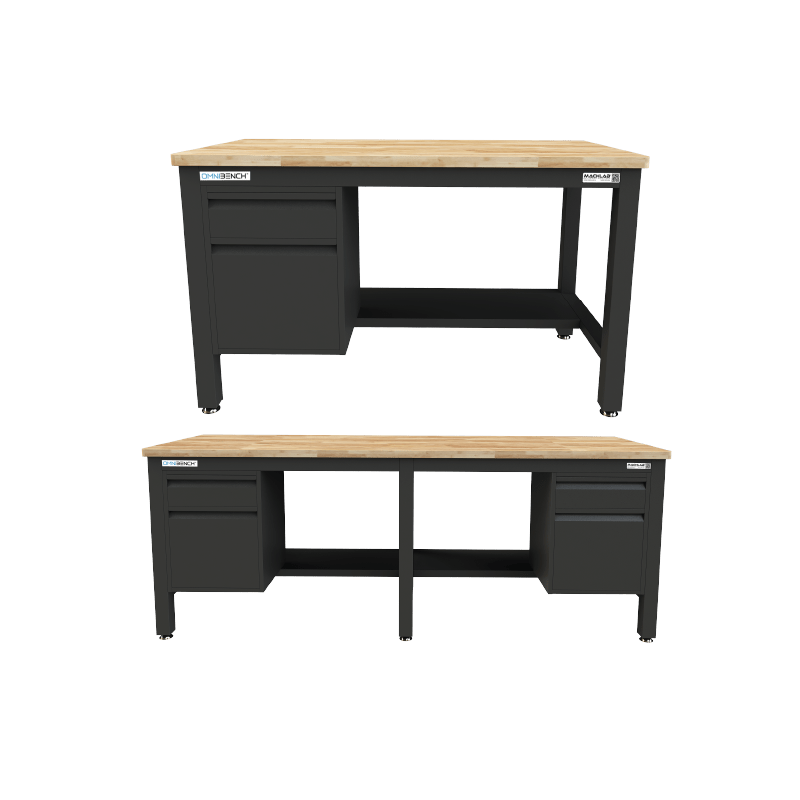
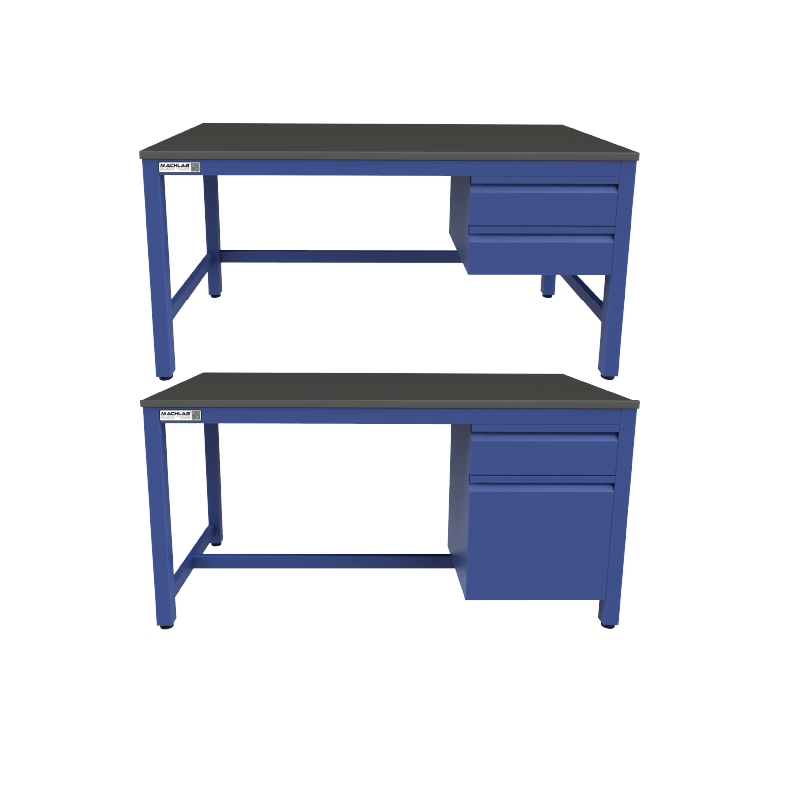
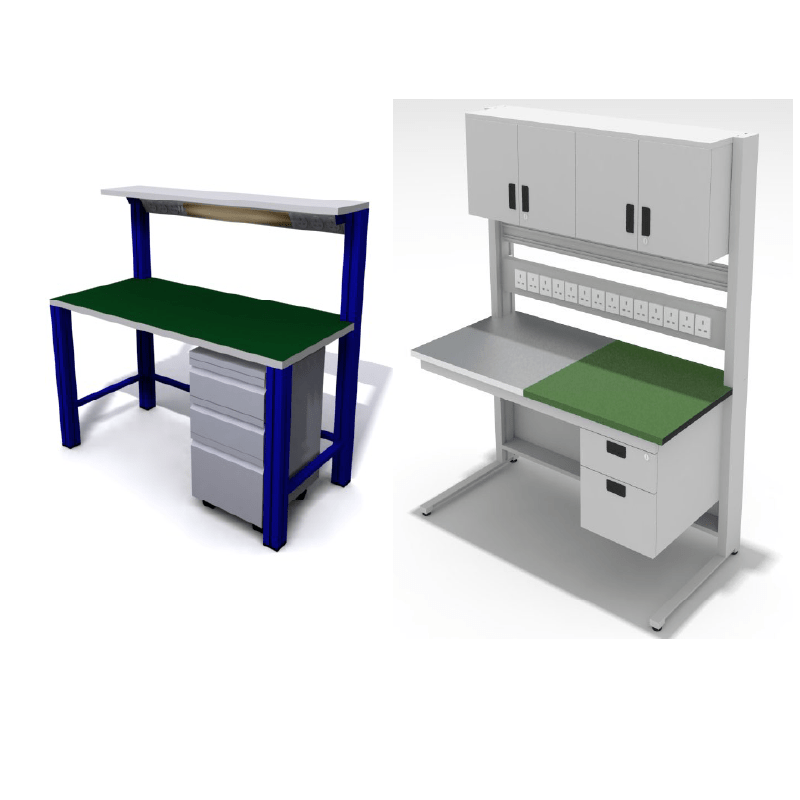
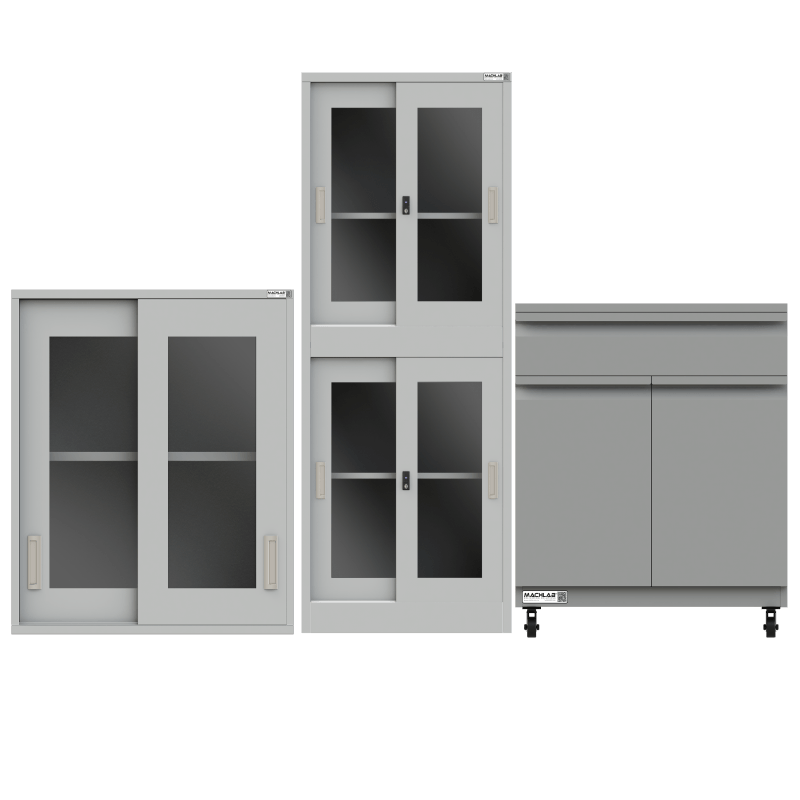
In modern high-tech manufacturing, heavy equipment assembly, semiconductor testing, and precision calibration, specifying a heavy duty industrial workbench is not simply a matter of acquiring industrial furniture—it is a foundational engineering decision that directly impacts operational safety, measurement accuracy, tool longevity, and worker ergonomics. Standard office desks or lightweight commercial tables fail catastrophically under heavy dynamic loads, cyclic tool impacts, chemical splashes, and electrostatic discharge (ESD) exposure.
Machlab’s engineering approach treats the workbench as an active structural subsystem. By combining heavy-gauge tubular cold-rolled steel (SPCC) or heavy structural box-section steel profiles with specialized joint geometry, our workbenches eliminate systemic racking, lateral wobble, and resonant micro-vibrations. Our high-capacity industrial workbenches maintain strict deflection limits under static loads exceeding 2,500 kilograms (5,500 lbs) Uniformly Distributed Load (UDL), ensuring compliance with rigorous international standards such as SEFA 8 (Scientific Equipment and Furniture Association) and ASHRAE specifications for laboratory stability.
Information Gain: Structural Deflection & Dynamic Dynamic-Load Factors
Many commercial workbench manufacturers publish static load capacities calculated under ideal lab conditions. However, real-world industrial environments present dynamic shock loads—such as dropping a 150kg engine block, positioning heavy mold dies with overhead cranes, or operating high-torque pneumatic tooling. Machlab workbenches incorporate a Safety Factor of 2.5:1 minimum, using Finite Element Analysis (FEA) to ensure that maximum structural deflection never exceeds L/360th of the span length under full capacity, preventing permanent frame fatigue or worktop warping over decades of operation.
Furthermore, in advanced microelectronics, defense manufacturing, and medical device assembly, mechanical load resistance must be paired with Static Dissipative (ESD) protection. Grounding pathways must be built directly into the frame metallurgy rather than relying on surface matting. Machlab workbenches utilize dual-circuit grounding points with volume-conductive ESD laminates, guaranteeing a consistent Surface-to-Ground Resistance ($R_g$) of $10^6$ to $10^9 \, \Omega$ across the entire worksurface.