Precision Engineering & QA Compliance
Architecting Next-Generation Industrial Inspection Tables for Zero-Defect Manufacturing
In high-tech industrial manufacturing, the quality assurance (QA) and quality control (QC) departments act as the final defense against component failure and costly production recalls. An industrial inspection table is far more than mere industrial furniture—it serves as an integrated, precision-controlled workstation designed to eliminate environmental variables during tactile, optical, and metrological evaluations. Global procurement teams across the semiconductor, medical device, aerospace, and surface-mount technology (SMT) electronics sectors require inspection tables that deliver strict electrostatic discharge (ESD) protection, vibration damping, shadowless illumination, and anatomical ergonomics.
Machlab, as Malaysia’s pioneer manufacturer of technical furniture with over 25 years of ISO 9001:2015 engineering authority, designs industrial inspection tables engineered to meet rigorous international standards, including ANSI/ESD S20.20, ISO 14644 cleanroom criteria, and SEFA guidelines. Our modular inspection tables bridge the operational gap between human visual precision and automated optical inspection (AOI) systems, providing high-yield throughput and reduced operator fatigue.
Machlab Engineering Insight: The Information Gain Advantage
Generic industrial workbenches often suffer from micro-vibrations, non-uniform ESD dissipation, and sub-optimal lighting—factors that directly contribute to false-pass or false-fail rates during component inspection. Machlab’s proprietary structural steel frame designs feature dual-grounding connection points, dimmable flicker-free LED canopy lighting (CRI > 90), and customizable static dissipative surface laminates ($10^6 - 10^9 \ \Omega/sq$) to ensure uncompromised measurement repeatabilities.
Product Range Recommendations
Machlab Industrial Inspection Table Configurations & Series
To address diverse procurement specifications—from delicate micro-soldering QA to heavy-duty automotive component measurement—Machlab provides four specialized inspection table series tailored for targeted manufacturing applications.
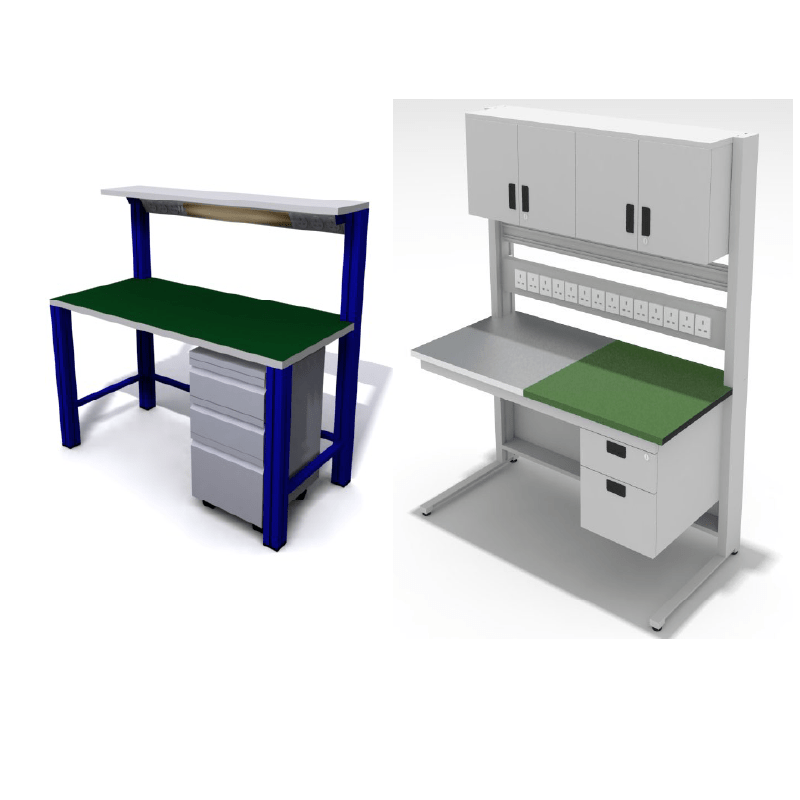
1. Flexis™ Modular ESD Inspection Table
Designed specifically for SMT electronics, PCB visual inspection, and semiconductor packaging line audits requiring strict electrostatic protection.
- Surface Resistivity: $10^6 \text{ to } 10^9 \, \Omega/\text{sq}$ (ANSI/ESD S20.20 compliant)
- Illumination: Integrated overhead overhead LED lighting frame (1,000–2,200 Lux dimmable)
- Structure: Cold-rolled heavy gauge steel frame with epoxy powder coating
- Modularity: Rear slotted uprights for monitor arms, louvered panels, and power rails
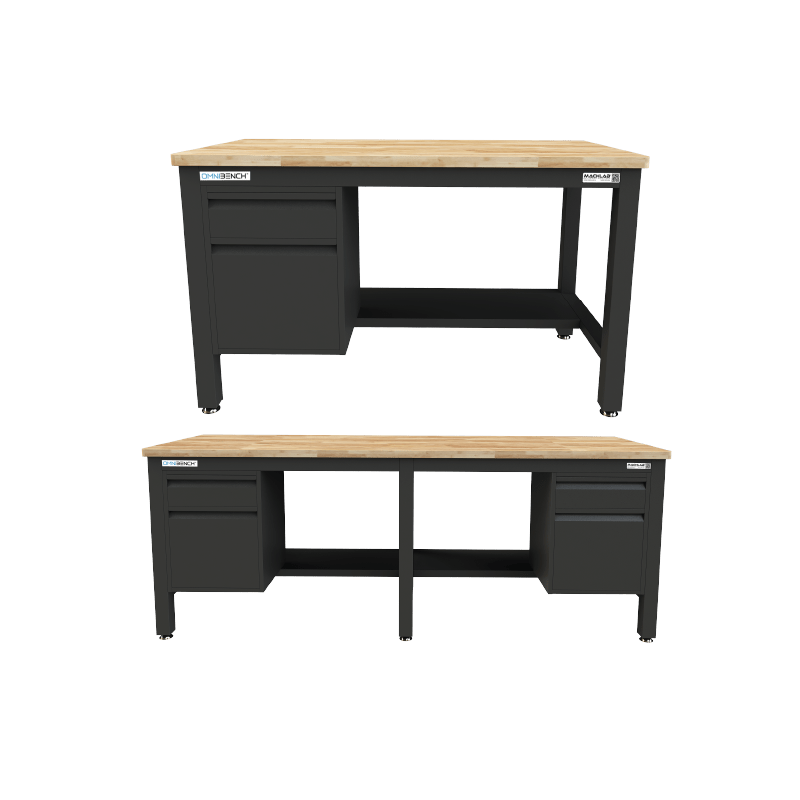
2. Omnibench™ Heavy-Duty QA Workstation
Engineered for heavy mechanical assemblies, casting inspection, mold evaluation, and high-load metrology operations.
- Load Capacity: Uniform static load capability up to 1,000 kg
- Worktop Options: Solid epoxy resin, high-pressure laminate, or 304/316L stainless steel
- Vibration Control: Heavy-duty leveling feet with anti-vibration rubber damper pads
- Storage: Under-bench lockable pedestal drawers for precision tool protection
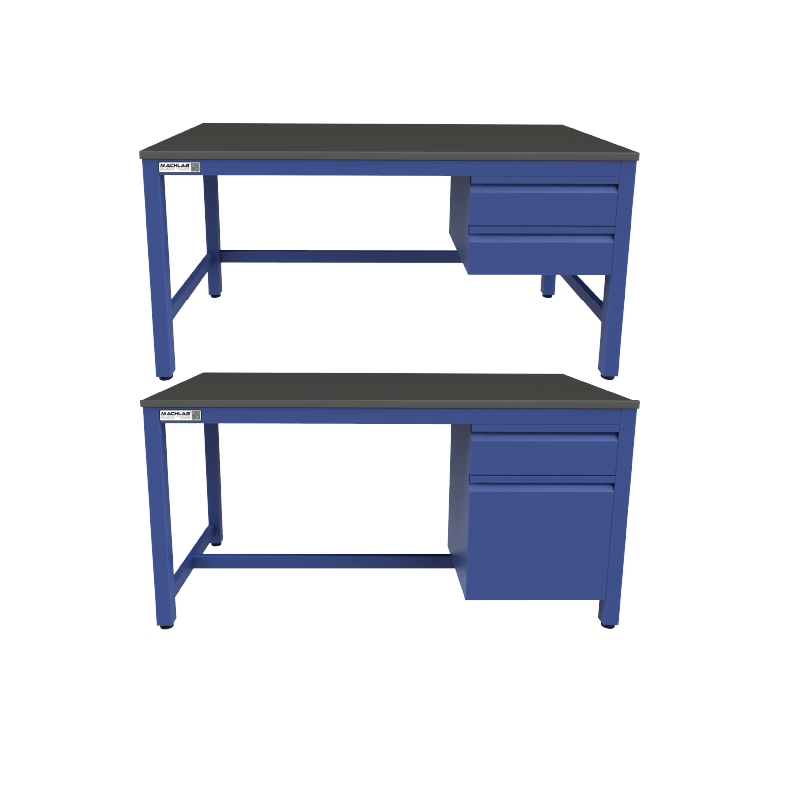
3. Kuda™ Ergonomic Quality Control Workbench
Optimized for high-volume consumer goods, plastics, and pharmaceutical packaging visual check points.
- Ergonomics: Manual or electric motorized height adjustment (750mm – 1100mm travel)
- Canopy Structure: Integrated tilt-adjustable visual angle magnifier brackets
- Utility Channel: Built-in pneumatic quick-connect couplings and multi-socket outlets
- Durability: Scratch-resistant chemical laminate surface resistant to cleaning solvents
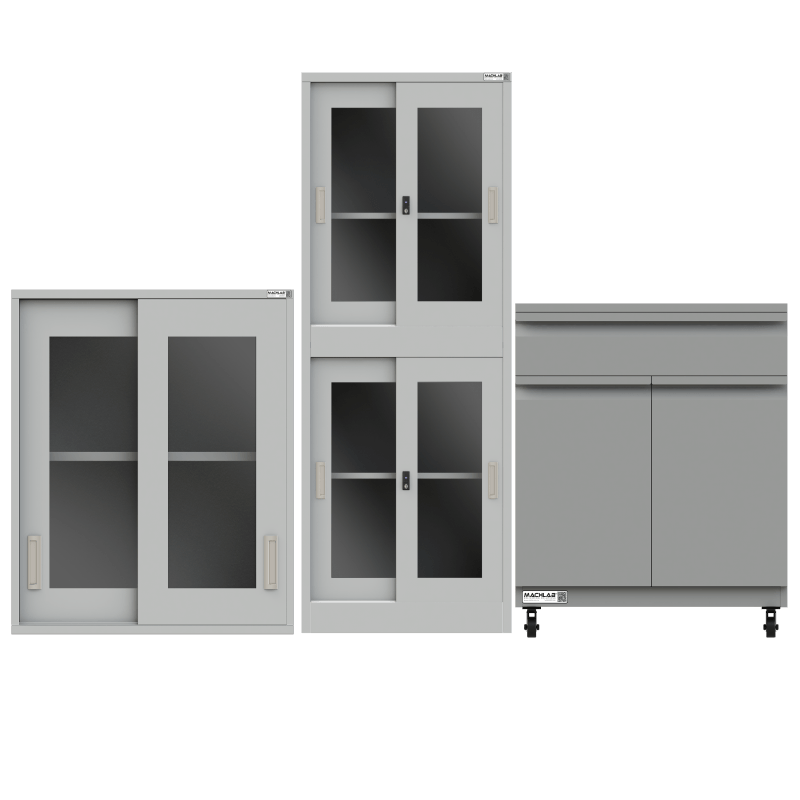
4. Cleanroom Class 10/100 (ISO 4/5) Inspection Table
Tailored for sterile wafer inspection, medical device packaging QA, and optical lens testing in controlled cleanroom spaces.
- Material: Full AISI 304 or 316L electropolished stainless steel construction
- Airflow Optimization: Perforated surface option for unidirectional laminar airflow
- Particle Generation: Ultra-low outgassing joints with fully welded, seamless ground seams
- Sterilization: Highly resistant to IPA, hydrogen peroxide, and harsh disinfectants
Selection Criteria & Engineering Specifications
Material Matrix & Worktop Performance Evaluation
Selecting the correct surface medium for an industrial inspection table directly impacts operational longevity, operator accuracy, and safety compliance. Below is a comparative technical matrix designed to guide procurement managers and facility engineers:
| Worktop Material |
ESD Resistance ($\Omega$) |
Chemical Resistance |
Impact Resistance |
Best Inspection Application |
| Static Dissipative ESD Laminate |
$10^6 - 10^9 \, \Omega/\text{sq}$ |
Moderate (Solvents/Cleaners) |
High |
SMT Electronics, PCB Micro-Assembly, Semiconductor QA |
| 304 / 316L Stainless Steel |
Conductive ($<10^5 \, \Omega/\text{sq}$) |
Excellent (Acids/Bases/Disinfectants) |
Very High |
Cleanrooms, Sterile Medical Packaging, Aerospace Parts |
| Monolithic Epoxy Resin |
Non-Conductive / Static Neutral |
Exceptional (Harsh Reagents) |
Extreme |
Chemical Testing, Metallurgical Failure Analysis |
| High-Pressure Phenolic Resin |
$10^9 - 10^{11} \, \Omega/\text{sq}$ |
High (Moisture & Heat) |
High |
General Industrial QC, Automotive Component Testing |
Industry Trends & Future Outlook
Emerging Global Procurement Trends for Industrial Inspection Benches
As manufacturing hubs transition to Industry 4.0 and AI-enhanced quality automation, the operational expectations for inspection tables are evolving rapidly. Global buyers are prioritizing adaptive, connected, and ergonomic inspection infrastructures.
1. AI-AOI Hybrid Workstation Integration
Modern inspection tables are increasingly designed with integrated high-speed camera mounts, edge-computing enclosure bays, and overhead robotic camera tracks. This allows human QA inspectors to validate edge cases flagged by automated vision systems without repositioning the workpiece.
2. Smart Ergonomics & Dynamic Height Actuation
To combat chronic musculoskeletal strain in multi-shift manufacturing, global tenders now heavily specify programmable electric sit-stand actuators with memory settings, ensuring optimal posture for inspectors of varying heights across 24/7 operations.
3. Continuous Real-Time ESD Ground Monitoring
Passive grounding is being superseded by smart IoT-enabled ESD wrist-strap and tabletop monitoring units embedded directly into the inspection bench, immediately alerting operators if ground continuity fluctuates beyond safe thresholds.
Manufacturer Authority & Trust
Why Global Procurement Leaders Choose Machlab
For over two decades, Machlab has established itself as Malaysia's primary original equipment manufacturer (OEM) and custom design-build provider for industrial workbenches and cleanroom infrastructure. Operating from our state-of-the-art Malaysian manufacturing facility, we serve clients across Southeast Asia, North America, Europe, and the Middle East.
ISO-Certified Factory Precision
Our ISO 9001:2015 certified manufacturing facility utilizes advanced CNC laser cutting, automated sheet metal bending, and electrostatic powder coating lines to deliver tight dimensional tolerances on every frame.
Turnkey Design & Customization
We don't just supply standard sizes. Our in-house engineering team provides 3D CAD modeling and custom spatial planning to match your exact floor layout, workflow, and electrical integration needs.
Full SEFA & ESD Compliance
Every ESD inspection table is rigorously batch-tested with surface resistance meters and electrical ground continuity verification prior to export shipment, complete with factory compliance documentation.
Global Procurement & Export Logistics
With robust sea shipping access from Port Klang and Penang, Machlab delivers flat-pack or pre-assembled technical furniture directly to contract manufacturers and multinational manufacturing sites globally.
Global Procurement FAQ
Frequently Asked Questions Regarding Industrial Inspection Tables
Common questions addressed by Machlab’s technical sales team for international buyers, quality managers, and facility planners:
Q1: How do I select the proper static dissipative surface resistance for an ESD inspection table?
For standard electronics assembly and component inspection under ANSI/ESD S20.20, the ideal point-to-point and point-to-ground resistance range is $10^6 \text{ to } 10^9 \, \Omega/\text{sq}$. Resistance below $10^5 \, \Omega$ is conductive and may cause rapid discharge hazards to micro-components, while surface resistance above $10^{11} \, \Omega$ acts as an insulator, allowing static charges to accumulate. Machlab provides certified ESD laminates with dual-grounding wrist-strap jacks to maintain a safe static neutral environment.
Q2: What lighting parameters are required for micro-visual inspection workbenches?
Effective visual QA inspection requires uniform illumination of 1,000 to 2,000 Lux at the work surface, with a High Color Rendering Index (CRI > 90) and a color temperature around 5000K (Daylight White). Machlab incorporates overhead LED canopy systems with dimming drivers and anti-glare diffusers to eliminate glare on reflective metallic parts or silicone wafers, significantly reducing eye strain during extended shifts.
Q3: Can Machlab industrial inspection tables support heavy metrology devices like CMMs or optical comparators?
Yes. Our Omnibench™ Heavy-Duty Inspection Table series is constructed from thick cold-rolled structural steel tubing and reinforced box frames capable of supporting static loads up to 1,000 kg. We can also integrate dedicated isolation blocks, heavy-duty leveling casters, and thick epoxy or stainless steel tops to accommodate Coordinate Measuring Machines (CMM), surface profile meters, and high-magnification optical microscopes.
Q4: Are Machlab inspection tables suitable for cleanroom environments?
Absolutely. Machlab manufactures dedicated cleanroom inspection tables utilizing electropolished 304 or 316L stainless steel. Frames feature fully welded seams, non-porous surfaces, and low-outgassing hardware designed to conform to ISO 14644-1 Class 5 (FED STD 209E Class 100) cleanroom particle emission constraints. Perforated tops are available to maintain laminar air flow dynamics.
Q5: What is the typical production lead time for custom OEM inspection table orders?
Standard modular models (such as the Flexis or Kuda series) generally carry a lead time of 2 to 3 weeks upon drawing approval. Fully customized dimension tables, custom cutouts, or complex multi-station QA lines typically take 3 to 5 weeks. Our export packaging ensures secure flat-packing or crating to prevent shipping damage.
Transform Your Quality Control Operations Today
Download our full technical workbench catalog or request a customized engineering consultation with Machlab’s technical specialists.