
Information Gain & Architectural Synthesis for Cleanroom Engineers
A Cleanroom Cross-Over Bench (also known as a Step-Over Bench) is not merely a piece of laboratory seating furniture—it is a critical physical, procedural, and aerodynamic boundary mechanism in gowning airlocks (PAL/MAL). It serves as the physical partition separating the "Dirty" (CNC or lower ISO grade) side from the "Clean" (higher ISO grade) side. Correct specification requires balancing metallurgical passivation, surface roughness ($R_a < 0.4\,\mu\text{m}$), laminar airflow turbulence mitigation, bio-burden eradication, and compliance with the updated EU GMP Annex 1 guidelines for aseptic manufacturing.
1. The Physics of Contamination Control: Why the Cross-Over Bench is a Critical Process Boundary
In high-grade cleanroom design (ISO 14644-1 Class 3 to Class 8), airlocks operate as pressure-differential cascades to prevent cross-contamination. While HVAC systems maintain air pressure barriers ($\Delta P = 10\text{--}15\text{ Pa}$), human operators represent the primary source of particulate and microbiological risk. More than 80% of cleanroom particle generation stems from personnel shedding skin squames ($10^7$ particles/day) and gowning room footwear transfer.
The cleanroom cross-over bench functions as a strict behavioral and mechanical barrier. It enforces the "one-shoe-at-a-time" protocol during gowning procedures, requiring personnel to unshoe on the pre-change side, pivot across the bench, and step directly into cleanroom-compatible overshoes or sterile boots on the post-change side without allowing outdoor contaminants to touch the clean floor zone.
From an architectural and aerodynamic standpoint, improper step-over bench selection can severely compromise cleanroom integrity:
- Airflow Disruption: Solid-top benches placed directly under laminar flow diffusers can create localized air stagnation micro-zones, allowing settling of viable microbes. Perforated or radius-profiled bench designs maintain continuous downward airflow sweeps.
- Particulate Entrapment: Conventional furniture fasteners, exposed threads, or hollow open-end tubes collect dust and moisture. High-specification cross-over benches utilize continuously TIG-welded, fully sealed internal frameworks with radius internal corners.
- Chemical Corrosion & Outgassing: Frequent wipe-downs using aggressive sporicidal agents (such as peracetic acid, hydrogen peroxide vapour [VHP], or quaternary ammonium compounds) cause degradation in low-grade steel or painted materials, leading to particulate shedding.
2. Machlab Engineered Cleanroom Cross-Over Bench Solutions: Product Recommendations
Machlab engineers cleanroom cross-over benches using high-purity AISI 304 and AISI 316L stainless steel, manufactured in our ISO 9001:2015 facility in Malaysia. Designed specifically to meet global biopharmaceutical, microelectronics, and medical device manufacturing standards, our product matrix offers engineered adaptability across varying cleanliness classes.
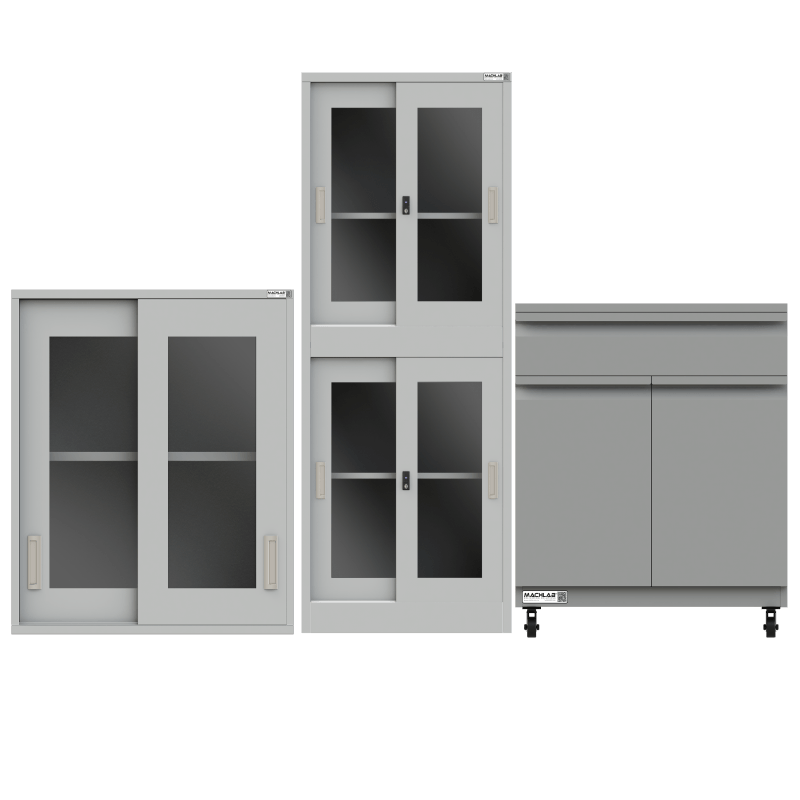
Machlab ISO-Pass™ 316L Ultra-Clean Step-Over Bench
Engineered for Grade A/B (ISO 5) pharmaceutical airlocks. Features electro-polished AISI 316L stainless steel construction with an ultra-smooth surface finish ($R_a < 0.38\,\mu\text{m}$) and zero-crevice radius joint engineering.
- Material: AISI 316L Electro-polished SS
- Surface Finish: $R_a \le 0.38\,\mu\text{m}$ (15 $\mu\text{in}$)
- Airflow Design: Perforated top (42% open area)
- Storage Options: Integrated shoe/boot shelves
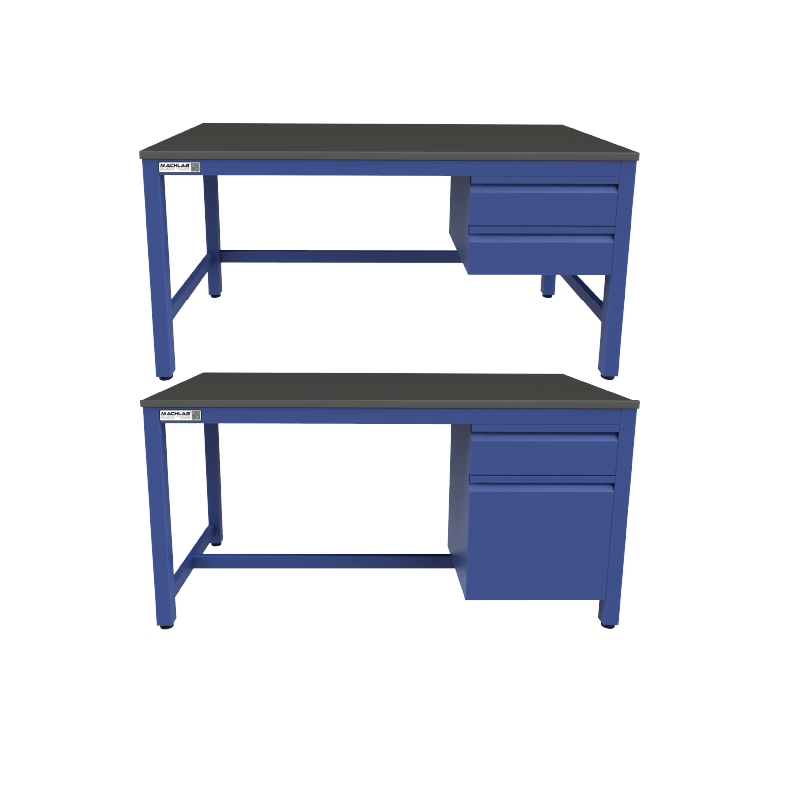
Machlab Dual-Partition Modular Gowning Bench
Designed for high-throughput semiconductor and electronics assembly cleanrooms (ISO 6–8). Incorporates dual-level shoe storage compartments, integrated static grounding studs, and heavy-duty load certification.
- Material: Heavy-gauge AISI 304 Satin Finish
- ESD Safety: ANSI/ESD S20.20 Ground Point
- Compartments: Individual cubby dividers
- Load Rating: 450 kg Static Uniform Load
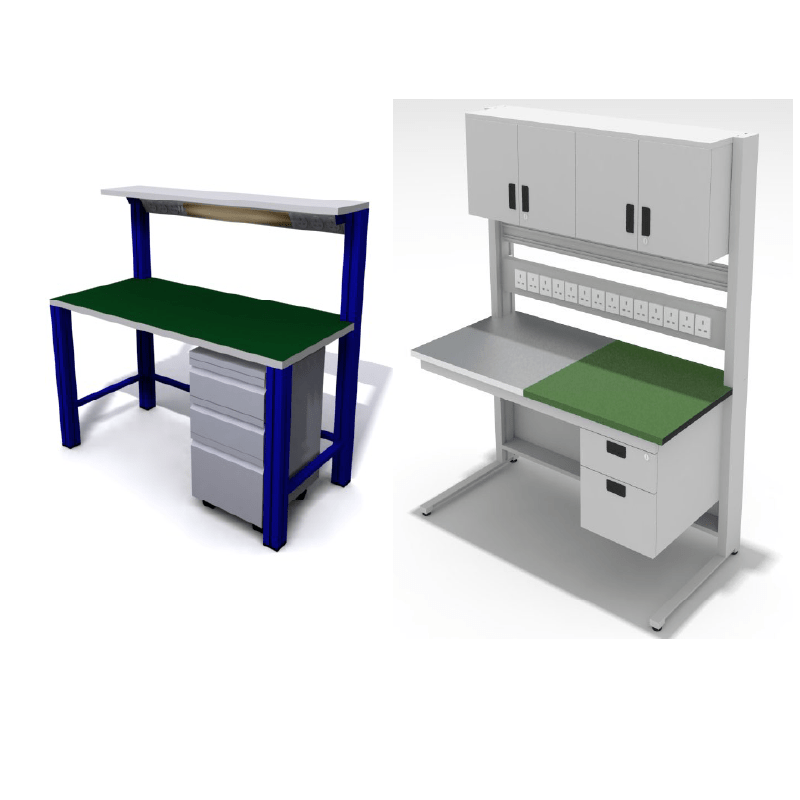
Machlab FlexiGown™ Modular Multi-Compartment Bench
A flexible gowning room system allowing custom configuration of bootie racks, footrests, and vertical partition guards. Built to prevent accidental clean-side foot placement through physical height elevation.
- Material: 304 Stainless Steel / Anti-static Poly
- Adjustability: Levelling feet with chemical gaskets
- Configurability: Modular 1m, 1.5m, 2m sections
- Ergonomics: Calculated seat height (480mm)
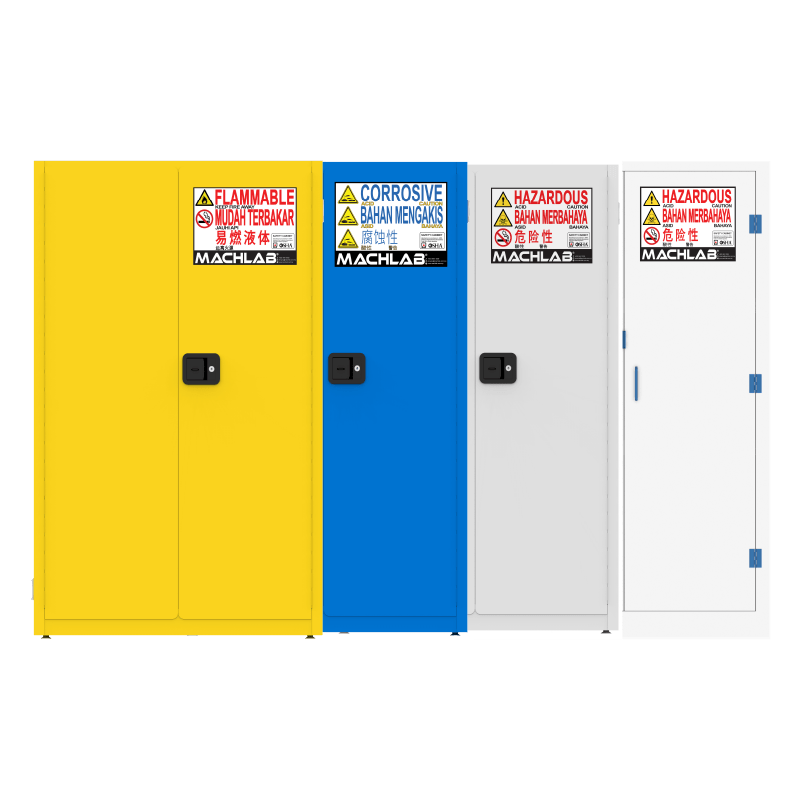
Machlab Heavy-Duty Sealed Box-Section Step Bench
Fully welded heavy-gauge stainless steel bench for heavy industrial cleanrooms, containment zones, and high-frequency personnel transitions. Designed to withstand continuous harsh disinfectant washdowns.
- Construction: Fully seam-welded box section
- Chemical Resilience: VHP & Sporicide Impervious
- Feet: Anchored or non-marking anti-slip
- Compliance: GMP Grade A-D Compatible
Technical Engineering Comparison Matrix
| Specification Feature | ISO Class 3 - 5 (Grade A/B) | ISO Class 6 - 7 (Grade C) | ISO Class 8 / CNC (Grade D) |
|---|---|---|---|
| Primary Metallurgy | AISI 316L Electro-polished Stainless Steel | AISI 304 Satin Finish Stainless Steel | AISI 304 Brush Finish / Epoxy Coated Steel |
| Surface Roughness ($R_a$) | $\le 0.38\,\mu\text{m}$ ($15\,\mu\text{in}$) | $\le 0.60\,\mu\text{m}$ ($24\,\mu\text{in}$) | $\le 0.80\,\mu\text{m}$ ($32\,\mu\text{in}$) |
| Seam & Joint Welding | 100% Continuous TIG Smooth Welded & Passivated | Continuous TIG Welded Joints | Stitch Welded with Cleanroom Sealant |
| Top Surface Design | Perforated (Laminar Airflow Pass-through) | Perforated or Solid Slopes | Solid Flat Top with Radius Edge |
| Shoe Storage Integration | Suspended Rod Racks (Zero Flat Trap) | Slotted Slanted Shelves | Enclosed Cubby Drawers / Open Shelves |
| ESD Grounding | Dual $10^6\text{--}10^9\,\Omega$ Resistance to Ground | Standard Ground Lug Connection | Optional Grounding Stud |
3. Global Procurement Trends: Sourcing Cleanroom Equipment in 2025–2030
Global supply chain realignments, the rapid expansion of semiconductor fabrication plants across Southeast Asia, and stricter enforcement of regulatory standards (such as the revised EU GMP Annex 1) are dramatically shifting how international procurement teams evaluate cleanroom equipment suppliers.
Procurement teams are moving away from piecemeal local metal fabrication toward fully validated, factory-tested cleanroom furniture solutions from established manufacturing hubs like Malaysia. Below are four macro trends shaping future procurement strategies:
- Shift Toward Total Cost of Ownership (TCO) & Corrosion Resistance: Procurement leads are evaluating the long-term cost impact of chemical degradation. Low-cost 201-grade or poorly passivated 304-grade benches rust when exposed to sodium hypochlorite or peracetic acid. Sourcing pre-passivated AISI 316L step-over benches eliminates replacement costs, downtime, and regulatory audit non-conformances over a 15-year operational lifecycle.
- Standardization of Modular Airlock Components: Global engineering contractors (EPCMV) now specify standardized modular gowning furniture packages. Machlab’s standardized footprint benches integrate seamlessly with cleanroom wall panel systems (such as HPL, Sandwich PU, or Stainless Steel panels), reducing on-site engineering adjustments.
- Demand for Full Traceability & Material Test Reports (MTR): Regulatory inspectors (FDA, EMA, PIC/S) increasingly demand mill test certificates proving chemical composition (ASTM A240/A480) and surface roughness verification logs ($R_a$ compliance reports) for all contact surfaces in gowning zones.
- ESD Protection Integration into Gowning Protocols: With semiconductor node sizes shrinking below 3nm, Electrostatic Discharge (ESD) during gowning presents a hidden yield killer. Cross-over benches must act as static dissipation points, transferring static charge safely to the cleanroom floor grid via conductive levelling feet.
4. Innovations in Cleanroom Bench Engineering & Material Science
As micro-contamination thresholds narrow and automation enters cleanroom airlocks, step-over bench engineering is undergoing notable advancements:
A. Advanced Electropolishing and Nano-Smoothing
Electropolishing is no longer limited to high-purity piping systems. Machlab utilizes non-contact electrochemical polishing on cleanroom benches to dissolve surface microscopic peaks, creating a mirror-like finish that reduces surface area by up to 40%. This dramatically decreases bacterial adhesion points (biofilm formation) and enables faster, more effective decontamination wipes.
B. Smart Airlock Integration & Interlocked Step-Over Systems
Future cleanroom gowning airlocks will feature sensor-integrated cross-over benches linked to door interlock access control systems. Optical sensors or pressure pads embedded within the bench detect when an operator has seated, completed the boot-shoe change, and crossed over correctly before unlocking the inner ISO cleanroom entry door.
C. Aerodynamic Airflow-Optimized Perforation Geometries
Through Computational Fluid Dynamics (CFD) modeling, modern step-over benches feature staggered laser-cut chamfered perforations. These perforations allow vertical laminar airflow from ceiling HEPA/ULTA filters to pass through the bench seat smoothly, avoiding eddy currents that pull floor dust up to knee level.
5. Frequently Asked Questions (FAQ) for Cleanroom Cross-Over Benches
Below are authoritative answers to the most common technical questions asked by global procurement officers, cleanroom architects, and compliance engineers when specifying step-over benches.
The industry standard height for an ergonomic cleanroom cross-over bench is 450 mm to 500 mm (18 to 20 inches) from the finished cleanroom floor. This height allows operators of varying stature to sit down smoothly, remove pre-gowning footwear, and swing their legs over to the clean side without their cleanroom garments dragging across the floor. The recommended depth is 350 mm to 450 mm, providing sufficient support without occupying unnecessary airlock footprint.
AISI 304 is the standard choice for general cleanroom applications (ISO 6–8, electronics, automotive, packaging), offering good mechanical strength and corrosion resistance against standard alcohol wipes (70% IPA). AISI 316L contains 2–3% Molybdenum and lower carbon content, making it vastly superior for Grade A/B (ISO 3–5) pharmaceutical and aseptic facilities that use aggressive sporicides (chlorine dioxide, peracetic acid, hydrogen peroxide vapour). 316L resists pitting corrosion and micro-cracking far better over extended chemical wash cycles.
In high-grade cleanrooms (ISO Class 3 to 5) with unidirectional (laminar) airflow ceiling HEPA coverage, a perforated top (typically 30%–45% open area with radiused laser-cut holes) is strongly recommended to prevent airflow disruption and dead zones. For ISO Class 7–8 or non-unidirectional cleanrooms where liquid spillages might occur during footwear changes, a solid top with rounded edges ($R \ge 5\text{mm}$) is preferred for easier liquid containment and wiping.
The revised EU GMP Annex 1 emphasizes contamination control strategies (CCS) and strict segregation of personnel flows. Machlab cross-over benches assist compliance by: (1) Providing physical partitioning with clearly demarcated unclean/clean sides; (2) Incorporating crevices-free, fully seam-welded designs that eliminate microbial breeding harborage; (3) Utilizing electro-polished surfaces ($R_a \le 0.38\,\mu\text{m}$) that withstand daily validated biocide sanitization regimens.
In electronics and semiconductor cleanrooms compliant with ANSI/ESD S20.20, cross-over benches are fitted with stainless steel grounding studs connected to conductive leg levelers or connected directly to the facility’s Earth Bonding Point (EBP). Resistance-to-ground ($R_g$) is maintained between $10^6\,\Omega$ and $10^9\,\Omega$, ensuring static charges accumulated on operator footwear are safely dissipated prior to crossing into the assembly area.
Yes. Machlab manufactures integrated shoe racks featuring open cylindrical rod designs rather than flat shelves. Flat shelves trap dust and block vertical airflow sweep. Open stainless steel tubular rails allow particulate matter to fall through to the cleanroom floor where it can be swept by air return grilles, while keeping outdoor footwear and cleanroom booties cleanly organized off the floor.
Machlab provides full validation support documentation for pharmaceutical and high-tech projects, including Mill Test Reports (MTR) according to EN 10204 3.1, Surface Roughness Inspection Certificates ($R_a$ measurements), Certificate of Conformance (CoC), and Passivation Verification Test logs (ASTM A967).
6. Why Global Procurement Teams Rely on Machlab: Enterprise Strengths
Machlab is a premier Malaysian pioneer in laboratory furniture, industrial ESD workbenches, fume hoods, safety storage cabinets, and cleanroom equipment. Serving procurement directors, EPCMV contractors, and facility managers across Southeast Asia, North America, Europe, and the Middle East, Machlab offers distinct manufacturing advantages:
The Machlab Manufacturing Advantage
25+ Years Industrial Mastery
Over two decades of specialized engineering experience delivering compliant technical furniture systems to 500+ major projects worldwide.
ISO 9001:2015 Quality Systems
Precision CNC laser cutting, automated bending, robotic TIG welding, and in-house electropolishing under strict quality assurance protocols.
Turnkey Design & Build Capabilities
From initial 3D BIM/CAD airlock modeling to direct factory export, installation support, and technical validation documentation.
ASEAN Sourcing Advantage
Strategic export location in Malaysia offering duty-free tariff benefits under multiple free trade agreements, reliable shipping routes, and competitive pricing.
Custom Engineering Flexibility
Bespoke dimensional customization, custom shoe compartment counts, integrated hand sanitizer brackets, and custom ESD grounding configurations.
Comprehensive Testing Compliance
All cleanroom products are factory-inspected for weld integrity, surface roughness, static dissipation, and structural load ratings.
Request Technical Drawings & Factory Direct Pricing
Consult with Machlab's cleanroom engineering team today. We provide CAD/BIM block models, detailed technical data sheets, and competitive FOB/CIF quotation packages for global projects.