
1. Executive Overview: The Critical Role of Cleanroom Gowning Cabinets
In high-grade controlled environments—ranging from semiconductor fabrication plants and biotechnology suites to sterile pharmaceutical compounding facilities—human personnel represent the single largest source of particulate and microbiological contamination. Even under strict gowning protocols, cleanroom garments (such as coveralls, hoods, booties, and smocks) continuously accumulate micro-particles, shedding skin cells, and airborne bio-burden during storage if kept in unclassified ambient air.
A specialized Cleanroom Gowning Cabinet (also known as a cleanroom garment cabinet or laminar flow gowning cabinet) serves as a specialized, ultra-clean storage unit designed to preserve the sterility and ISO cleanliness class of gowning apparel prior to personnel entry. By maintaining continuous vertical laminar airflow through HEPA (High-Efficiency Particulate Air) or ULPA (Ultra-Low Penetration Air) filters, these cabinets continuously purge particulates from stored garments, creating a positive-pressure barrier against external airborne contaminants.
Technical Engineering Insight (Information Gain)
Unlike standard static stainless steel lockers, active HEPA-filtered cleanroom gowning cabinets actively reduce particle counts on stored apparel by up to 99.995% at 0.3 microns. Integrating a vertical laminar flow garment cabinet into your cleanroom anteroom significantly extends the operational lifespan of disposable cleanroom garments and minimizes re-washing cycles for reusable laundered garments, delivering a direct operational ROI within 12 to 18 months.
According to ISO 14644-1 and IEST-RP-CC002.3 recommendations, maintaining garment cleanliness at ISO Class 5 (FED STD 209E Class 100) or higher is mandatory for Grade A/B pharmaceutical filling rooms and sub-micron semiconductor assembly lines. Machlab’s precision-engineered gowning cabinets provide an uninterrupted clean boundary, ensuring that garment storage never compromises your facility's environmental monitoring (EM) metrics.
2. Machlab Cleanroom Gowning Cabinet Product Series & Specifications
Machlab designs and manufactures a diverse portfolio of cleanroom gowning cabinets engineered from high-grade SUS 304 / 316L stainless steel and electro-galvanized steel with anti-microbial ESD powder coating. Below are our core product models recommended for global procurement teams:
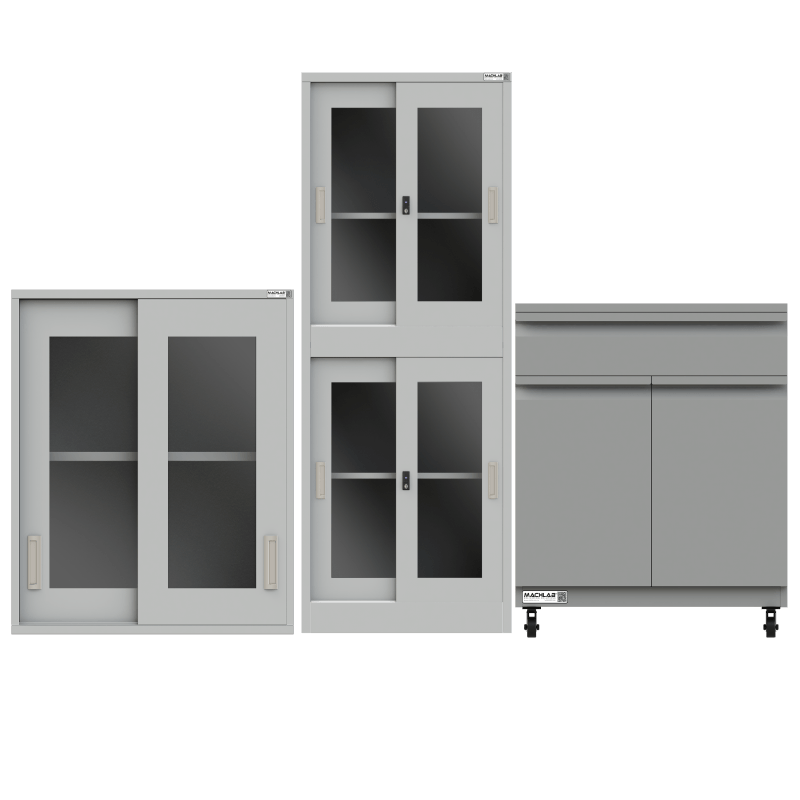
Active Laminar Flow Gowning Cabinet (LFG-Series)
Features top-mounted EC centrifugal blower units, H14 HEPA filtration (99.995%), dynamic differential pressure monitoring, and integrated UV-C sterilization cycles for high-grade ISO Class 3–5 cleanrooms.
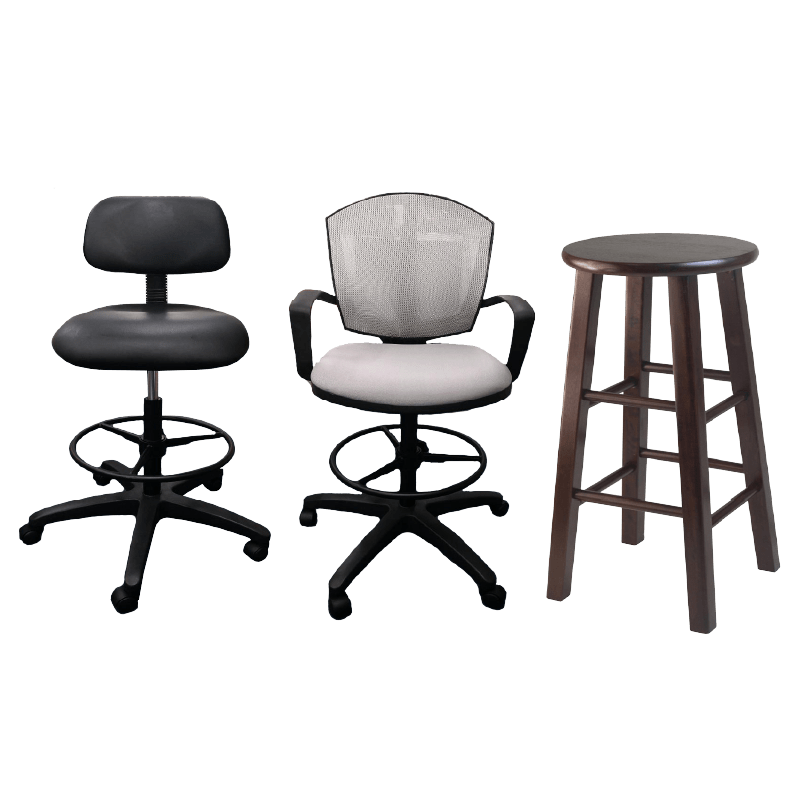
Passive Stainless Steel Garment Storage Cabinet (PSG-Series)
Constructed entirely from 304 or 316L mirror/satin-polished stainless steel with sloped tops, adjustable full-width hanging rods, shoe compartments, and static-dissipative tempered glass doors.
Technical Specification Comparison
To assist cleanroom engineering teams in drafting precise technical datasheets and tenders, Machlab provides the following standard engineering specifications for our LFG Active and PSG Passive models:
| Technical Parameter | Machlab LFG-Active Series | Machlab PSG-Passive Series |
|---|---|---|
| ISO Cleanliness Class | ISO Class 5 (Class 100) / ISO Class 3 Option | ISO Class 6 – ISO Class 8 Compatible |
| Filtration Efficiency | HEPA H14 (99.995% @ 0.3 µm) / ULPA U15 Optional | N/A (Exhaust Connection Option Available) |
| Airflow Pattern | Vertical Laminar Airflow (0.45 m/s ± 20%) | Natural Convection / External HVAC Ducting |
| Cabinet Material | 304/316L Stainless Steel or ESD Powder Steel | 304 / 316L Brushed / Electro-polished SS |
| Blower Fan Type | Energy-Efficient EC Centrifugal Blower (230V/50Hz) | N/A (Non-powered design) |
| Noise Level | < 58 dBA at 1 meter | Silent (0 dBA) |
| Control System | Microprocessor Touch Panel & Magnehelic Gauge | Manual Keylock / RFID Access Reader |
| Internal Fixtures | SS Hanging Bars, Perforated Shelves, Shoe Racks | Heavy-Duty SS Hangers, Adjustable Shelving |
| Surface Resistivity (ESD) | 106 – 109 Ω/sq (ESD Dissipative) | 105 – 109 Ω/sq (Grounded Stainless Steel) |
3. Technological Trends & Innovations in Cleanroom Storage
As advanced manufacturing moves toward smaller semiconductor node architectures (2nm/3nm process nodes) and stringent FDA cGMP Annex 1 sterile manufacturing regulations, cleanroom gowning equipment has evolved from static storage furniture into intelligent, active contamination-control systems.

A. Real-Time Airflow Velocity & Differential Pressure Sensing
Modern cleanroom compliance demands verifiable proof of continuous positive pressure. Machlab’s active gowning cabinets are built with analog Magnehelic pressure differential gauges or digital micro-differential sensors. These sensors continuously monitor pressure drops across the HEPA filter. When filter loading occurs and pressure differential exceeds nominal parameters (typically >250 Pa), an automated visual/audible alarm alerts facility engineers to conduct filter replacement or maintenance.
B. Smart IoT & Building Management System (BMS) Integration
Leading pharmaceutical and semiconductor facilities require centralized monitoring. Machlab integrates Modbus RTU / BACnet IP communication protocols into our cabinet control boards, enabling facility management software to track fan status, HEPA filter life, UV-C run hours, and door-open alarms remotely. This eliminates manual logbook entries and simplifies quarterly ISO qualification audits.
C. Computational Fluid Dynamics (CFD) Optimized Laminar Flow
A frequent design flaw in generic gowning cabinets is airflow dead zones, where stagnant air pockets permit particulate buildup near the cabinet bottom. Machlab engineers utilize CFD simulations to model air streamlines around hanging garments. By engineering specialized perforated bottom return grilles and sloped internal plenums, our cabinets deliver uniform, non-turbulent vertical laminar airflow across all stored coveralls and footwear compartments.
4. Global Cleanroom Procurement Trends & Market Insights
Procurement directors overseeing global laboratory and cleanroom expansion projects face changing market dynamics. When sourcing cleanroom furniture across North America, Europe, Asia-Pacific, and the Middle East, several key procurement trends dominate decision-making:
1. Transition to Modular & Flexible Cleanroom Architecture
Fast-track biotech facilities and OSAT (Outsourced Semiconductor Assembly and Test) plants require adaptable furniture layouts. Modular gowning cabinets featuring heavy-duty leveling casters, quick-connect electrical sockets, and expandable side latching systems allow facility managers to reconfigure gowning anterooms without structural wall alterations.
2. Focus on Total Cost of Ownership (TCO) & Energy Efficiency
While legacy gowning cabinets utilized high-wattage AC blowers, procurement specifications now prioritize Electronically Commutated (EC) brushless motor technology. EC fans reduce power consumption by up to 60–65%, generate significantly less heat load inside air-conditioned cleanroom suites, and operate with lower acoustic profiles (<58 dBA).
3. Supply Chain Diversification & Malaysian Manufacturing Advantage
Global EPC contract managers are actively diversifying their supply chains away from single-source markets. Malaysia has established itself as Southeast Asia's premier high-tech manufacturing hub. Companies like Machlab offer high-grade ISO 9001 and ISO 14001 compliant cleanroom equipment manufactured with European standard tooling, competitive freight logistics, and favorable international tariff structures.
Need Custom Cleanroom Gowning Cabinet Specifications?
Our cleanroom engineering team provides technical drawings, CFD airflow analysis, and custom dimensioning for project tenders.
5. Cleanroom Gowning Cabinet Procurement FAQ
Addressing the most critical technical and purchasing inquiries asked by cleanroom designers, validation specialists, and procurement leads:
Q1: What is the difference between an Active and Passive Cleanroom Gowning Cabinet?
An Active Gowning Cabinet contains an internal blower fan and HEPA/ULPA filtration system that continuously forces clean vertical laminar air over stored garments, actively scrubbing particles away. A Passive Gowning Cabinet is an unpowered stainless steel cabinet designed for static storage inside an already classified cleanroom space or connected to an external facility HVAC ducting system.
Q2: Which ISO cleanliness class can Machlab Laminar Flow Gowning Cabinets achieve?
Machlab LFG-Series active cabinets are equipped with H14 HEPA filters (99.995% efficiency @ 0.3 µm) as standard, achieving ISO Class 5 (Class 100) conditions within the storage chamber. When configured with ULPA U15 filters (99.9995% efficiency @ 0.12 µm), cabinets achieve ISO Class 3 (Class 1) cleanliness for advanced microelectronics applications.
Q3: Why is 304 or 316L Stainless Steel required for cleanroom gowning furniture?
Grade 304 and 316L stainless steel offer high corrosion resistance against harsh cleanroom sanitizing agents such as isopropyl alcohol (IPA), hydrogen peroxide vapor (VHP), peracetic acid, and quaternary ammonium compounds. Stainless steel prevents outgassing, rust formation, and particle shedding while providing non-porous, smooth surfaces that conform to cGMP sanitary standards.
Q4: How frequently must the HEPA filters in cleanroom garment cabinets be replaced?
Under normal cleanroom anteroom operating conditions, pre-filters should be inspected monthly and replaced every 3 to 6 months. The main HEPA filter typically has a service life of 3 to 5 years, depending on airborne dust load and operating hours. Annual aerosol challenge testing (PAO / DOP integrity testing) should be performed to verify filter seals.
Q5: How does electrostatic discharge (ESD) protection work in gowning cabinets?
Cleanroom garments made of synthetic polyester fibers generate static charges through friction. Machlab gowning cabinets incorporate static-dissipative acrylic or tempered glass panels (surface resistivity of 106 – 109 ohms/sq), grounded stainless steel hanging bars, and dedicated grounding terminal studs to safely dissipate static build-up to the facility earth grounding wire.
Q6: Can Machlab design custom dimensions to fit specific cleanroom wall cutouts or airlock layouts?
Yes. Machlab operates a complete sheet metal engineering and CAD design team at our Malaysian production plant. We manufacture custom single-door, double-door, pass-through, or multi-compartment gowning cabinets tailored to your exact architectural space constraints and room height requirements.
6. Enterprise Advantages & Why Partner with Machlab
Machlab is a pioneer Malaysian manufacturer specializing in laboratory technical furniture, industrial ESD workbenches, fume hoods, safety cabinets, and cleanroom equipment. Over more than 25 years of continuous operational excellence, Machlab has earned the trust of over 500 major organizations across Southeast Asia, the Middle East, and international markets.
Our Core Corporate Strengths:
- In-House Precision Manufacturing: Equipped with CNC laser cutting, automated benders, robotic welding, and electrostatic powder coating lines at our Selangor, Malaysia facility.
- Turnkey Design & Build Expertise: We do not merely supply products; our technical team offers full end-to-end design engineering, 3D BIM rendering, project contracting, and technical validation assistance.
- Compliance with Global Standards: Our cleanroom equipment is tested and certified to comply with ISO 14644, EN 1822 (HEPA standards), ASHRAE, and SEFA guidelines.
- Robust Quality Assurance (QA): Every gowning cabinet undergoes factory acceptance testing (FAT), including airflow velocity mapping, noise level verification, and electrical safety testing prior to crate packaging and shipment.