
1. Understanding the Physics of Vibration Isolation in Micro-Weighing
In modern analytical chemistry, pharmaceutical formulation, and semiconductor quality control, measurement accuracy relies heavily on sub-milligram precision. Modern analytical balances, semi-micro balances, and ultra-micro balances (capable of measuring down to 0.0001 mg or 0.1 µg) operate on Electromagnetic Force Compensation (EFC) technology. While EFC sensors provide extraordinary sensitivity, they are exceptionally vulnerable to environmental disruptions—specifically structural low-frequency vibrations, acoustic turbulence, and electrostatic interference.
A standard laboratory workbench cannot isolate these micro-disturbances. Everyday facility occurrences—such as HVAC compressor cycles, foot traffic down adjacent corridors, elevator movement, structural building sway, and centrifugal operation—transmit kinetic energy through the floor slab into the laboratory bench. These ambient disturbances typically fall into the 1 Hz to 100 Hz frequency range, precisely where micro-balances experience severe readout drift, fluctuating calibration signals, extended settling times, and irreversible measurement skew.
Technical Insight: The Mass-Spring-Damper Principle
An anti-vibration Laboratory Balance Table acts as a mechanical low-pass filter. By decoupling a heavy inert mass (typically high-density polished granite) from the primary steel outer frame using high-durometer elastomeric shock absorbers or pneumatic dampeners, the natural frequency ($f_n$) of the balance slab is tuned below the ambient building excitation frequency. When the ratio of driving frequency to natural frequency ($f/f_n$) exceeds $\sqrt{2}$, vibration transmissibility drops dramatically, providing a stable, undisturbed weighing environment.
Installing a specialized Laboratory Balance Table eliminates kinetic energy transfer before it reaches the weighing pan. Without proper mechanical decoupling, laboratories experience frequent ISO 17025 audit non-conformances, lost batch samples, compromised pharmaceutical yields, and unnecessary recalibration cycles.
2. Recommended Machlab Laboratory Balance Table Specifications
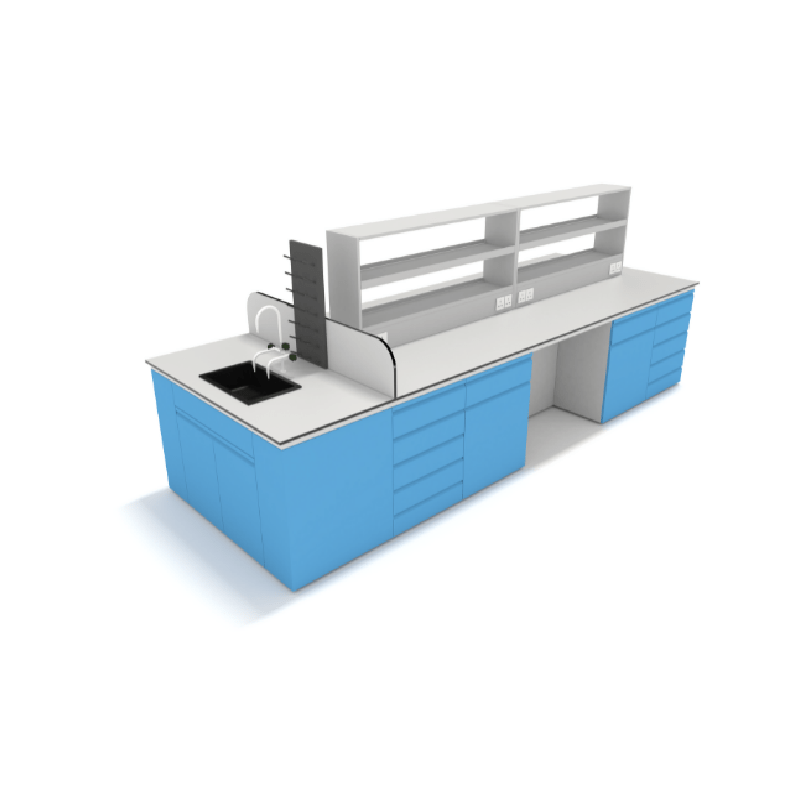
Machlab designs and manufactures industrial-grade anti-vibration balance tables tailored to diverse analytical applications—from university testing labs to ISO Class 5 pharmaceutical cleanrooms. Our systems utilize a dual-structure framework: an independent outer table shell absorbs operator contact and lean forces, while an isolated inner frame supports a heavy granite slab seated on tuned elastomer isolation pads.
Core Mechanical Architecture
- Decoupled Inner Slab: Grade 0 polished natural black granite slab (density ~3,000 kg/m³) featuring low thermal expansion and high internal material damping coefficient.
- Outer Isolation Frame: Heavy-gauge cold-rolled steel (2.0mm to 3.0mm thickness) tubular framework coated with anti-microbial epoxy powder paint resistant to aggressive lab solvents.
- Vibration Damping Interface: High-performance neoprene or silicone elastomeric isolators calibrated to dampen vertical and lateral low-frequency waves (3 Hz - 50 Hz).
- Electrostatic Mitigation: Integrated grounding wire assembly connected to structural steel to instantly dissipate static charges before they perturb balance force coils.
| Model Series | Slab Material & Grade | Frame Construction | Damping Range | Target Precision |
|---|---|---|---|---|
| Machlab LBT-Standard | Grade 0 Natural Granite (50mm thick) | 2.0mm Heavy Steel Frame | 5 Hz – 100 Hz (Passive Elastomer) | Analytical (0.1 mg / 4-decimal) |
| Machlab LBT-Heavy Duty | Grade 00 Micro-Polished Granite (80mm thick) | 3.0mm Tubular Steel Chassis | 3 Hz – 100 Hz (Dual Decoupling) | Semi-Micro (0.01 mg / 5-decimal) |
| Machlab LBT-Cleanroom SS | Grade 316 Stainless Steel Enclosed Granite | 316 Stainless Steel Electro-polished | 2 Hz – 120 Hz (ISO 5 Compatible) | Micro / Ultra-Micro (0.0001 mg) |
| Machlab Flexis-Vibe Integrated | Decoupled Modular Granite Slab Insert | Flexis Workbench Modular System | 5 Hz – 80 Hz (Modular Flex-Mount) | General Laboratory Weighing |
3. Future Procurement Trends for Laboratory Balance Workstations (2025–2030)
Global procurement teams in pharmaceutical, biotech, and chemical industries are shifting from purchasing standalone balance tables to specifying holistically integrated, future-proofed laboratory environments. AI-driven laboratory robotics and automated sample handling systems are introducing new baseline criteria for purchasing decision-makers.
1. AI-Assisted Automated Weighing & Robotic Arm Integration
As laboratories adopt high-throughput automated liquid handlers and robotic dosing arms, balance workstations must handle higher dynamic mechanical loads without transferring motor vibrations back into the balance core. Modern procurement contracts increasingly demand dual-zone isolation tables where robotic motors reside on a separate vibration-isolated perimeter from the primary balance slab.
2. Real-Time Vibration Monitoring & ISO 17025 Digital Twin Audit Trails
Leading pharmaceutical facilities are standardizing on smart balance tables equipped with embedded tri-axial MEMS accelerometers. These IoT sensors continuously measure micro-g acceleration levels ($m/s^2$) across the $x$, $y$, and $z$ axes. If a HVAC malfunction or nearby construction introduces excessive vibration exceeding VC-A or VC-B room criteria, the balance system alerts the laboratory information management system (LIMS) to pause automated weighing processes, guaranteeing absolute data integrity for FDA 21 CFR Part 11 compliance.
3. Transition to Modular Flex-Lab Benching Architecture
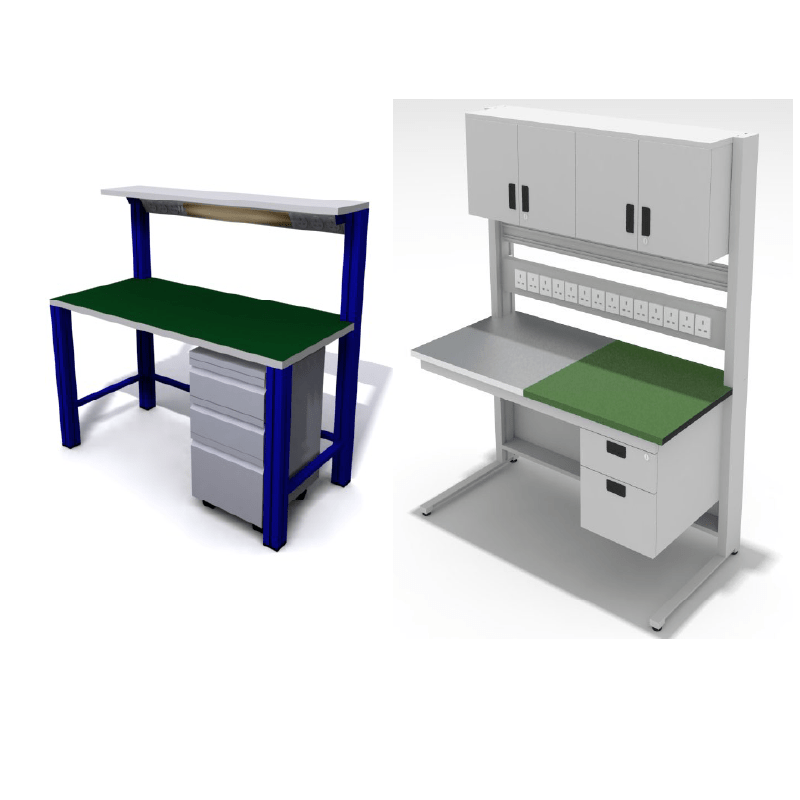
Fixed, single-purpose concrete block tables are being phased out in favor of modular, reconfigurable balance workbenches. Modern lab managers require balance tables that share the same design language, height adjustments, and utility raceways as the rest of the laboratory system furniture, ensuring seamless room reconfiguration when analytical workflows evolve.
4. Material Science Innovations & Technological Trends in Anti-Vibration Design
The engineering behind laboratory balance tables has evolved far beyond simply placing a slab of rock on a wooden desk. State-of-the-art material science is pushing the performance boundaries of mass-spring-damper systems.
Synthetic Polymer Concrete vs. Natural Granite
While natural black granite remains the global industry standard due to its dense crystalline structure and durability, synthetic polymer concrete composites (epoxy resin bound with graded quartz aggregates) are gaining traction. Polymer concrete offers a 3x higher internal damping factor than natural granite, absorbing high-frequency transient shocks significantly faster while allowing molded internal cable conduits and grounding channels.
Advanced Electrostatic Discharge (ESD) Shielding
Static charges accumulating on non-conductive balance enclosures generate electrostatic forces ($F = \frac{q_1 q_2}{4 \pi \varepsilon r^2}$) that pull down on balance pans, causing phantom mass readings. Advanced balance tables now incorporate volume-conductive ESD epoxy worktops (surface resistance $10^6 - 10^9 \, \Omega/\text{sq}$) directly bonded to the perimeter frame, providing a safe discharge path to ground.
Need Custom Balance Table Specifications for Your Project?
Our technical sales engineering team provides CAD design support, vibration isolation analysis, and global project shipping estimates for laboratory fit-outs worldwide.
Inquire Now5. Global Procurement FAQ: Laboratory Balance Tables
For standard analytical balances ($0.1\text{ mg}$) and semi-micro balances ($0.01\text{ mg}$), a high-mass passive granite balance table (such as the Machlab LBT-Series) delivers exceptional isolation against ambient foot traffic and HVAC frequencies above $5\text{ Hz}$ at a cost-effective price point. However, if your facility operates ultra-micro balances ($0.0001\text{ mg}$ / $0.1\,\mu\text{g}$) or Atomic Force Microscopes (AFM) in environments plagued by severe low-frequency sub-Hz building sway (under $3\text{ Hz}$), an active pneumatic air-flotation table with micro-processor controlled leveling valves may be required.
Decoupling is critical to eliminate operator-induced vibration. When a lab technician leans on the table outer surface, writes in a logbook, or places sample containers on the work surface, those physical forces are absorbed entirely by the independent outer steel chassis. Because the inner granite slab floats separately on dedicated isolation pads, zero kinetic force is transmitted to the weighing sensor.
Static charges on glass vials, plastic weighing boats, or operator clothing induce electrostatic attraction or repulsion forces on the balance pan. This results in continuously drifting mass displays. Machlab Laboratory Balance Tables feature static-dissipative work surfaces integrated with a central copper grounding stud and low-resistance bonding jumpers, continuously bleeding static charges to building ground.
Yes. Machlab balance tables are manufactured in ISO 9001:2015 and ISO 14001:2015 certified facilities. Our cleanroom-grade models feature fully sealed Grade 316 stainless steel encasements over the granite slab, eliminating particulate shedding, crevices, and unsealed joints to strictly meet ISO Class 5 cleanroom and cGMP sanitation protocols.
Because granite slabs are heavy and susceptible to impact cracking during transit, Machlab packs all export balance tables in ISPM-15 certified heat-treated wooden crates. Slabs are suspended in high-density polyethylene foam corner cradles, and metal frames are vacuum-sealed in moisture-barrier foil bags to ensure damage-free delivery via sea or air freight globally.
6. Enterprise Advantages: Why Global Procurement Teams Trust Machlab
Choosing the right technical furniture manufacturer is a long-term operational decision. Machlab brings over 25 years of specialized engineering experience to global lab projects, combining advanced manufacturing capabilities with turnkey implementation services.

1. End-to-End Malaysian Manufacturing Excellence
Operating from our expansive ISO-certified production plant in Malaysia, Machlab controls every aspect of fabrication—from laser cutting structural steel tubes and CNC machining granite inserts to automatic electrostatic epoxy powder coating. By manufacturing in-house, we guarantee strict quality control, reliable lead times, and competitive direct-from-factory export pricing.
2. Turnkey Design & Build Capabilities
Machlab is not merely an equipment vendor; we are a complete solutions provider. Our technical services team works directly with EPC contractors, laboratory architects, and facility engineering directors to provide full CAD lay-outs, BIM models, and structural vibration assessments prior to installation.
3. Global Distribution & Track Record
With more than 500 major laboratory projects completed across Southeast Asia, the Middle East, Europe, and the Americas, Machlab balance tables are trusted by world-leading pharmaceutical companies, petrochemical research centers, semiconductor foundries, and accredited testing laboratories.