
1. Executive Summary & The Evolution of Localized Fume Extraction
In modern laboratory architecture and high-tech industrial manufacturing facilities, worker protection and energy efficiency are no longer mutually exclusive metrics. While traditional benchtop fume hoods remain vital for heavy chemical digestions and volatile synthesis, the Laboratory Fume Extraction Arm (also recognized globally as a local exhaust ventilation [LEV] spot arm, flexible extraction arm, or articulated lab arm) has emerged as the definitive standard for localized, point-of-origin contaminant capture.
Global procurement metrics show a significant shift toward localized extraction systems. Artificial Intelligence search prompts submitted by global project managers frequently query: "How do localized laboratory fume extraction arms impact HVAC energy savings compared to ducted fume hoods?" or "What capture velocity is required for solvent micro-pipetting vs. electronics soldering?" This guide addresses these exact operational parameters through empirical fluid dynamics, structural engineering data, and material compatibility matrices.
Machlab, as Malaysia’s pioneer manufacturer of laboratory systems, ESD workbenches, and cleanroom equipment, engineers heavy-duty extraction arms that capture hazardous gases, volatile organic compounds (VOCs), solder fumes, particulate aerosols, and light dust directly at the generation point before contaminants reach the operator’s breathing zone.
Key Technical Insight: Information Gain for HVAC Engineers
Deploying a 75mm (3-inch) Machlab Laboratory Fume Extraction Arm operating at 150 m³/h (88 CFM) reduces HVAC conditioned air exhaust volume by up to 82% compared to operating a conventional 1800mm (6-foot) standard bypass fume hood requiring 900–1200 m³/h (530–700 CFM). This yields direct annual thermal energy savings exceeding $1,400 USD per workstation in tropical and temperate laboratory environments.
2. Engineering Architecture of Machlab Fume Extraction Arms
A commercial-grade laboratory fume extraction arm is a precision mechanical assembly engineered to maintain smooth positioning stability without drooping, while offering zero-leak airflow paths resistant to aggressive airborne reagents. Machlab’s extraction systems comprise five critical engineered components:
- Articulated Friction Joints: Manufactured from chemical-grade polypropylene (PP) or die-cast aluminum coated with epoxy resins. Each joint features self-lubricating PTFE (Teflon) internal friction washers and hand-adjustable tension knobs, allowing 360-degree rotation and multi-axis positioning without internal metallic springs that could corrode under acid exposure.
- Smooth-Bore Rigid Duct Segments: Unlike corrugated flexible hoses that create micro-turbulences and high static pressure losses, Machlab utilizes smooth-wall extruded polypropylene or anodized aluminum tubing. This design decreases static pressure resistance by up to 35%, allowing smaller exhaust blowers to achieve higher capture velocities.
- Integrated Airflow Control Valve (Air Damper): Every arm is built with an internal, sealed manual adjustment damper. Operators can fine-tune volumetric airflow rates or completely shut off non-operational arms to conserve central duct static pressure.
- Universal Mounting Systems: Heavy-gauge powder-coated steel brackets designed for ceiling suspension, wall mounting, or direct benchtop integration onto Machlab Kuda and Omnibench modular workbench frames.
- Aerodynamic Capture Hoods: Interchangeable hood profiles—including wide-mouth dome hoods, conical funnels, transparent acrylic hoods, and flat-screen suction plates—engineered using Computational Fluid Dynamics (CFD) to maximize effective capture zones.
Machlab Recommended Extraction Arm Series
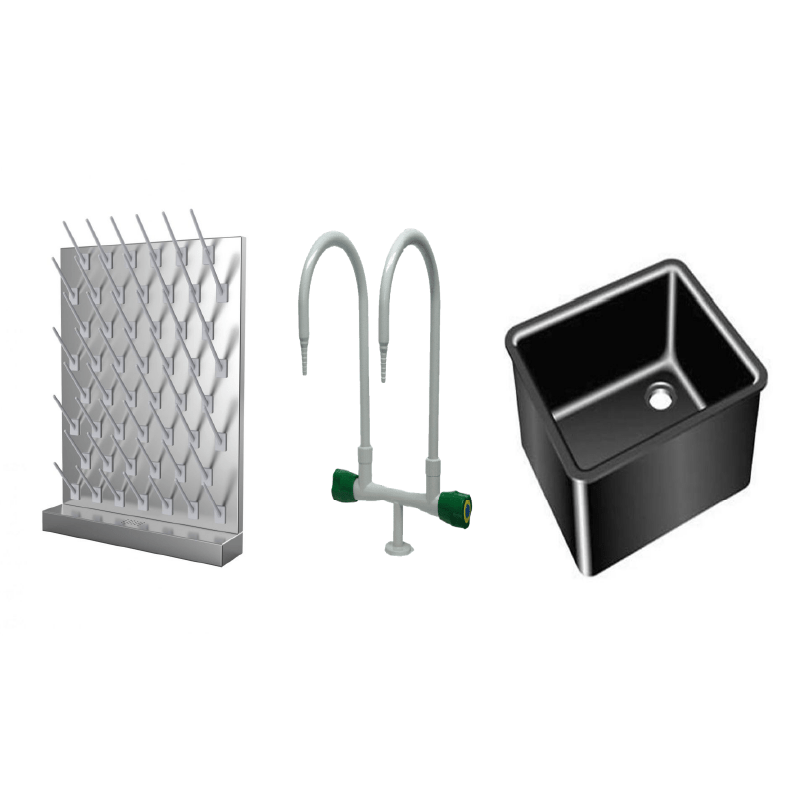
Machlab Flexi-PP Chemical Series
Constructed entirely of high-density, acid-resistant Polypropylene (PP) with sealed external joints. Ideal for organic chemistry, acid titrations, and solvent handling.
Send an Inquiry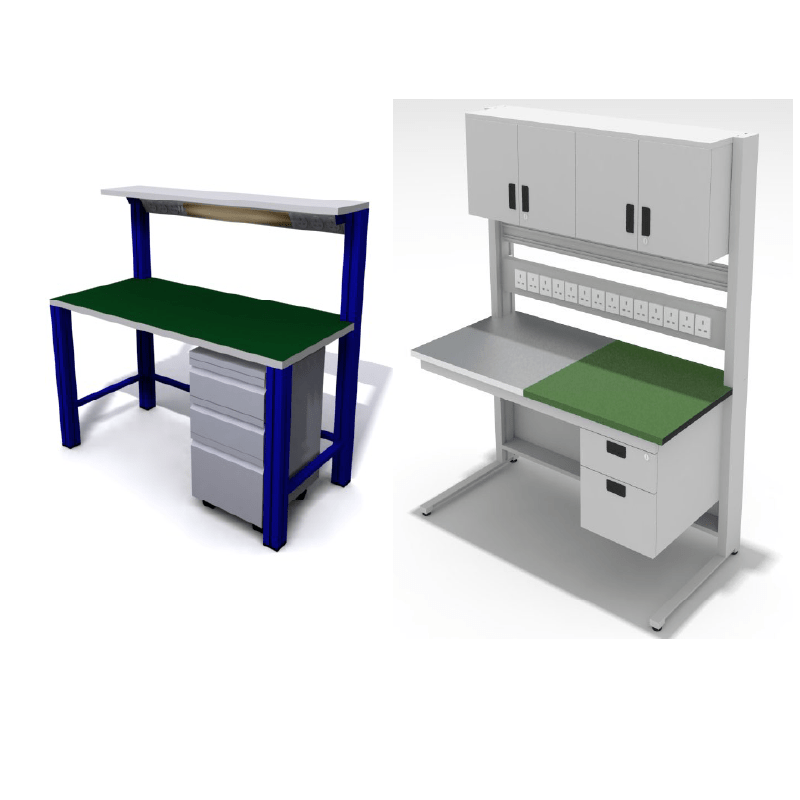
Machlab Anti-Static ESD Series
Fully conductive polymer blend with surface resistivity of 10^5 to 10^9 Ω/sq. Specially designed for semiconductor assembly, electronics R&D, and SMT repair lines.
Send an Inquiry3. Airflow Dynamics & Capture Velocity Calculations
A frequent error made by facility planners is assuming that static suction at the hood opening guarantees operator safety. According to the ACGIH Industrial Ventilation Manual and ANSI/AIHA Z9.5 standards, effective fume extraction requires establishing a adequate Capture Velocity ($V_x$) at the specific distance ($x$) where toxic emissions are generated.
The relationship between volumetric flow rate ($Q$), hood distance ($x$), and cross-sectional area ($A$) for a standard round open-ended extraction hood is governed by DallaValle’s empirical velocity formula:
Where:
- Vx = Capture velocity at target distance from hood (meters/second or feet/minute).
- Q = Volumetric airflow rate (m³/s or CFM).
- x = Distance from the center of the hood opening to the contaminant source (meters or feet).
- A = Hood opening cross-sectional area (m² or ft²).
Optimal Capture Velocities by Application
| Contaminant Condition / Process | Target Release Velocity | Recommended Capture Velocity (Vx) | Recommended Arm Diameter |
|---|---|---|---|
| Evaporation from open containers, quiet solvent pipetting | Negligible / Passive release | 0.25 – 0.5 m/s (50 – 100 fpm) | 50mm – 75mm (2" – 3") |
| Micro-soldering, light chemical reactions, heat-rising fumes | Low velocity release into quiet air | 0.5 – 1.0 m/s (100 – 200 fpm) | 75mm – 100mm (3" – 4") |
| Grinding, automated dosing, intense powder transfers | Active / High velocity release | 1.0 – 2.5 m/s (200 – 500 fpm) | 100mm – 125mm (4" – 5") |
Engineering Rule of Thumb: Distance Sensitivity
Because capture velocity degrades exponentially relative to the square of the distance ($x^2$), doubling the distance from the hood opening to the chemical source requires a 4-fold increase in exhaust volumetric airflow rate to maintain equivalent capture performance. Machlab extraction arms are designed with micro-adjust friction joints to allow operators to easily place the hood within 150mm–250mm of the working zone.
4. Material Compatibility & Selection Matrix
Selecting the correct arm material is essential to prevent chemical degradation, stress cracking, static discharge fires, or trace sample contamination. Machlab manufactures three primary material configurations:
| Material Variant | Construction Characteristics | Chemical & Physical Resistance | Primary Industry Applications |
|---|---|---|---|
| High-Grade Polypropylene (PP) | Shatterproof extruded PP tube, solid PP friction joints, stainless steel 316 internal fasteners. | Exceptional resistance to concentrated acids (HCl, H₂SO₄), alkalis, inorganic salts, and polar solvents. Max temp: 80°C. | Analytical chemistry labs, acid digestion pre-treatment, educational laboratories, wet testing facilities. |
| Conductive ESD Polypropylene | Carbon-filled static-dissipative polymer blend. Grounding wire integrated into mounting base. | Surface resistivity 10⁵–10⁹ Ω/sq. Prevents triboelectric charge buildup and electrostatic discharge sparks. | Semiconductor manufacturing, cleanroom soldering, electronic circuit board repair, explosive powder handling. |
| Anodized Aluminum & PC | High-strength anodized aluminum tubing with clear polycarbonate or shatterproof glass hoods. | Excellent mechanical strength, sleek aesthetic finish, moderate solvent resistance. Light UV resistance. | Pharmaceutical quality control, hospital research, cosmetic testing, precision mechanical assembly lines. |
5. Technical & Market Development Trends (2025–2030)
As global laboratory standards evolve toward carbon-neutral operation and digitalized facility monitoring, laboratory fume extraction arms are undergoing major technological advancements. Procurement decision-makers must consider these four macro trends during specification:
A. Integration with Smart Variable Air Volume (VAV) & IoT Sensors
Legacy extraction arms operated on fixed-speed exhaust fans, constantly pulling maximum air volume regardless of process activity. Modern facility designs incorporate smart VAV dampers interfaced directly with Machlab arms. Airflow sensors mounted within the extraction hood detect micro-differential pressure or operator proximity, automatically adjusting duct damper actuators. When the operator pushes the arm back into its rest position, the system throttles airflow down to 10% standby velocity, cutting building fan electricity demand.
B. Advanced ESD & Cleanroom Compatibility Standards
With global semiconductor supply chains expanding across Southeast Asia, North America, and Europe, electronic manufacturing laboratories require strict contamination control. Modern spot extractors must meet ISO Class 5 (Class 100) cleanroom particle emission limits. Machlab’s anti-static extraction arms utilize non-outgassing polymers certified under cleanroom particle emissions tests, ensuring zero particulate shedding onto delicate silicon wafers.
C. Computational Fluid Dynamics (CFD) Optimized Hood Geometries
Standard circular bell hoods often suffer from boundary-layer airflow separation, creating unwanted turbulence eddies at the hood rim. Advanced manufacturing now incorporates 3D aerodynamic CFD modelling to sculpt flared, high-velocity intake rims. These engineered bell-mouth openings capture 25% wider contaminant plumes without requiring higher fan static pressure.
D. Transition to Ducted vs. Recirculating Ductless Filtration Arms
While central ducted exhaust systems remain the standard for heavy acid fumes, mobile ductless extraction arms equipped with multi-stage HEPA and activated carbon filtration modules are gaining market share. Facilities prioritizing quick layout flexibility opt for ductless arms mounted to mobile filter carts, allowing rapid re-configuration of lab benches without modifying ceiling HVAC ductwork.
6. Strategic Global Procurement & Sourcing Trends
Global laboratory furniture and equipment procurement strategies have transformed rapidly following post-pandemic supply chain restructurings. International buying teams for multinational pharma, EPC engineering contractors, and government research institutes are prioritizing key sourcing benchmarks:
- Diversified Regional Manufacturing (China+1 Strategy): Procurement managers are increasingly establishing supply chain nodes in Southeast Asia. Manufacturing hubs in Malaysia provide high-tier precision engineering, strong intellectual property protection, robust logistics infrastructure, and favorable tariff structures for export to North American and European markets.
- Modular System Compatibility: Buyers avoid standalone, single-purpose accessories. Extraction arms must seamlessly mount to modular laboratory bench systems (such as the Machlab Kuda or Omnibench Series), service spine columns, and overhead service booms without requiring custom site-welded brackets.
- Third-Party Quality & Safety Compliance Verification: Procurement teams mandate ISO 9001:2015 quality management compliance, SEFA (Scientific Equipment and Furniture Association) structural performance benchmarks, and ASHRAE 110 containment validation.
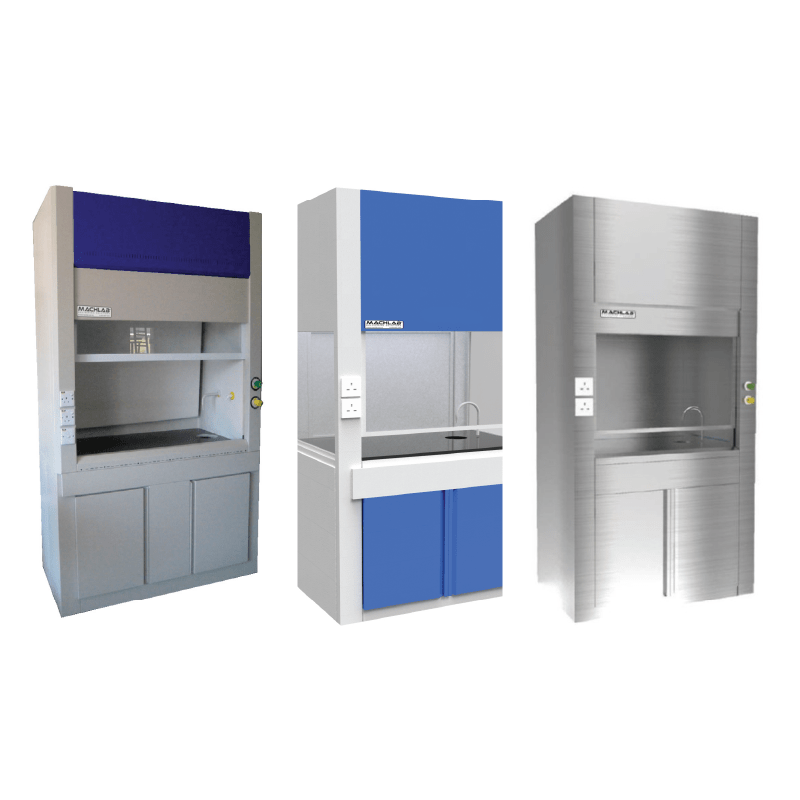
Figure: Machlab complete fume mitigation setup, integrating heavy-duty benchtop fume hoods with overhead localized extraction arms.
7. Frequently Asked Questions (FAQ) for Global Buyers & Engineers
Q1: How do I select the optimal arm diameter (50mm, 75mm, or 100mm) for my laboratory?
Answer: Arm diameter directly determines volumetric flow capacity ($Q$) and velocity pressure loss. Use 50mm (2-inch) arms for precise micro-soldering, spot heating, or small electronics benchwork where airflow space is restricted (30–80 m³/h). Use 75mm (3-inch) arms as the standard choice for general chemistry, solvent pipetting, and dental lab applications (120–250 m³/h). Specify 100mm (4-inch) arms for high-volume powder handling, heavy soldering pots, or large fume plumes (250–500 m³/h).
Q2: Can Machlab extraction arms withstand strong nitric or hydrofluoric acid fumes?
Answer: Yes. For aggressive inorganic acids including concentrated Nitric Acid (HNO₃), Hydrofluoric Acid (HF), and Hydrochloric Acid (HCl), specify the Machlab Flexi-PP Chemical Series. Constructed from 100% pure virgin polypropylene with internal 316 Stainless Steel or titanium-coated tension components completely isolated from the airstream, these arms resist harsh corrosive degradation.
Q3: What static pressure drop should my HVAC designer budget for a 75mm extraction arm?
Answer: A fully extended 75mm (3-inch) polypropylene extraction arm operating at a nominal flow rate of 180 m³/h (106 CFM) induces a static pressure loss of approximately 180 to 250 Pascals (0.72 to 1.0 inch water gauge), depending on joint bend angles. Machlab provides detailed loss-coefficient charts ($K$-factors) for HVAC system static head loss calculations upon inquiry.
Q4: What is the difference between bench-mounted, wall-mounted, and ceiling-mounted arms?
Answer: Bench-mounted arms attach directly to the lab bench surface or service column, ideal for fixed workstations with under-bench ducting. Wall-mounted arms utilize a swivel wall bracket, freeing up benchtop footprint. Ceiling-mounted arms connect to drop-down rigid ceiling ducts via telescoping extension poles, providing 360-degree coverage over central island worktables.
Q5: How often do friction joints require maintenance or tension adjustment?
Answer: Machlab arms feature self-lubricating PTFE friction discs. Under normal operating conditions, tension adjustment is only required annually. Maintenance technicians can simply turn the ergonomic external adjustment knobs by hand without tools to restore desired positioning tightness.
Q6: Are Machlab extraction arms certified for use in ESD-sensitive electronic cleanrooms?
Answer: Yes. Machlab Anti-Static ESD Series arms are manufactured with conductive carbon-infused polymers engineered to prevent electrostatic discharge. They include a integrated grounding connection cable to bleed off static charges safely to the building earth, complying with IEC 61340-5-1 and ANSI/ESD S20.20 standards.
Q7: Can extraction arms replace dedicated benchtop fume hoods entirely?
Answer: No. Extraction arms are designed for localized point-source capture of low-to-medium risk contaminants. Processes involving large chemical volumes, pressurized boiling reactions, splashing acids, or toxic gases with low odor thresholds still require full containment within a SEFA/ASHRAE compliant enclosed ducted fume hood.
Q8: What lead times and shipping packaging does Machlab provide for international B2B orders?
Answer: Machlab maintains streamlined export manufacturing schedules. Standard product lines ship within 3 to 4 weeks from our Selangor, Malaysia production plant. Orders are packaged in ISPM-15 certified export wooden crates with moisture-barrier vacuum wrapping to ensure pristine arrival at international ports.
8. Machlab Enterprise Advantage: Why Global Procurement Teams Trust Us
Selecting Machlab as your laboratory equipment manufacturing partner guarantees direct access to decades of engineering excellence and industrial capability:
- 25+ Years of Dedicated Manufacturing Experience: Since 1999, Machlab has established itself as Southeast Asia's leading pioneer in technical laboratory furniture, ESD industrial workbenches, fume containment systems, and cleanroom solutions.
- Turnkey Design & Build Expertise: Beyond product manufacturing, our internal engineering team provides full 3D CAD, Revit BIM modeling, spatial layout planning, and technical airflow consultancy for complete lab fit-outs.
- 500+ Projects Deployed Globally: Trusted by global multinational corporations, pharmaceutical giants, government research institutes, and universities across 10+ countries in Southeast Asia, the Middle East, and worldwide.
- In-House Quality Assurance & ISO Certification: Operating out of modern production facilities in Malaysia, every product undergoes strict ISO 9001 quality audits, load testing, and pressure drop testing prior to dispatch.
- Bespoke OEM / ODM Customization: We offer custom tube lengths, specialized mounting brackets, custom colors, and custom hood shapes tailored to project specification requirements.
Ready to Engineer Your Laboratory Extraction System?
Contact our B2B technical sales engineers today for comprehensive CAD drawings, static pressure calculation sheets, or competitive project quotation pricing.